Τρίτη 7 Μαΐου 2019

ΠΩΣ ΑΝΤΙΜΕΤΩΠΙΖΕΤΑΙ Η ΑΛΛΕΡΓΙΑ ΣΤΟ ΣΧΟΛΙΚΟ ΠΕΡΙΒΑΛΛΟΝ (ΑΣΘΜΑ )


7η Μαΐου 2019 - Παγκόσμια Ημέρα για το Άσθμα, αποτελεί λοιπόν μια ημέρα εγρήγορσης και εκπαίδευσης για το συχνό αυτό νόσημα του αναπνευστικού.
Το φετινό μήνυμα περιλαμβάνει το ακρωνύμιο STOP που αναφέρεται σε 4 βασικές αρχές της ορθής διαχείρισης του άσθματος:


1) Την σωστή εκτίμηση των ασθματικών συμπτωμάτων
2) Την αξιολόγηση της απάντησης στη θεραπεία
3) Την παρακολούθηση και επανεκτίμηση και
4) Την προσαρμογή της φαρμακευτικής αγωγής βάσει των ανωτέρω.
Η ορθή διαχείριση του άσθματος είναι ένας εφικτός στόχος που οδηγεί σε βελτίωση της ποιότητας ζωής των πασχόντων αλλά και σε ελάττωση του κόστους για τη δημόσια υγεία που είναι ιδιαίτερα υψηλό όταν δεν αντιμετωπίζεται σωστά. Το μήνυμα αυτό είναι ακόμη πιο σημαντικό για όσους πάσχουν από σοβαρό άσθμα που επηρεάζει σημαντικά την καθημερινή τους ζωή και προβληματίζει τον θεράποντα ιατρό. Με τις νεότερες βιολογικές θεραπείες ο στόχος της επιτυχούς διαχείρισης αυτών των ασθματικών είναι περισσότερο από κάθε άλλη φορά εφικτός.

Λέμε λοιπόν STOP στα σφάλματα στη διαχείριση του άσθματος και
Λέμε ΝΑΙ στην βελτίωση της ποιότητας ζωής των ασθματικών


Πηγή πληροφοριών : allergikos.gr

Κυριακή 5 Μαΐου 2019

High Blood Pressure (Hypertension): Symptoms, Causes, Treatments


What Is Hypertension?


Hypertension is high blood pressure, a very common condition in older adults. Blood pressure is the physical force exerted by the blood as it pushes against the walls of the arteries. Blood pressure readings are written in two numbers separated by a line. The top number represents the systolic blood pressure and the bottom number represents the diastolic pressure. The systolic blood pressure is the pressure in the arteries as the heart contracts pushing the blood forward. The diastolic pressure is the pressure in the arteries as the heart relaxes.

Normal blood pressure is below 120/80. New guidelines from the American Heart Association (AHA) and the American College of Cardiology (ACC) published in November of 2017 consider blood pressure elevated between 120/80 and 129/80. High blood pressure or hypertension is now classified as stage 1 if your systolic reading falls between 130 and 139 or your diastolic reading is between 80 and 89. A measure of 140/90 or higher is now considered stage 2 hypertension. A hypertensive crisis is defined as a systolic rate over 180 or a diastolic rate above 120. An elevated blood pressure means that the heart must work harder to pump blood. High blood pressure can also damage the walls of the arteries. Over time, hypertension increases the risk of heart disease, kidney disease, and stroke. It is estimated that one in three adults in America are affected by hypertension.

High blood pressure is more common in older people. At age 45, more men have hypertension than women. By age 65, this is reversed and more women are affected. People with diabetes have a greater risk of hypertension than those without diabetes. Having a close family member with high blood pressure also increases your risk of developing it. About 60% of all people with diabetes also have hypertension.

What Are the Symptoms and Signs of Hypertension?


Hypertension may not produce any symptoms, even if you have had it for years. That’s why it is sometimes referred to as a "silent killer." It’s estimated that 1 out of every 5 people with high blood pressure aren’t aware that they have this major risk factor for strokes and heart attacks. If not properly treated, high blood pressure can damage the heart and circulation, lungs, brain, and kidneys without causing noticeable symptoms. Symptoms of high blood pressure may be present in those who have an extremely high blood pressure. Symptoms of extremely high blood pressure include the following:
Severe headaches
Fatigue
Vision problems
Chest pain
Difficulty breathing
Irregular heartbeat
Blood in the urine
Pounding in the chest, neck, or ears

What Causes a Hypertension?


Blood pressure is given as a reading of two numbers, such as 110/70. The higher number (systolic) is the pressure when the heart beats. The diastolic, or lower number shows the pressure between the heartbeats, while the relaxed heart is refilling with blood. Normal blood pressure readings are lower than 120/80. The cause of most hypertension is unknown. Occasionally, conditions of the kidney or adrenal gland are the cause of high blood pressure.

There are several factors that may cause high blood pressure, but the exact cause is unknown. The following factors may increase one’s risk for high blood pressure:
Smoking
Overweight or obesity
Lack of physical activity
Too much salt consumption
Too much alcohol consumption (more than 1 to 2 drinks per day)
Stress
Older age
Genetics
Family history of high blood pressure
Chronic kidney disease
Adrenal and thyroid disorders
Sleep apnea

Early Warning Sign: Elevated Blood Pressure


An elevated blood pressure reading means that your blood pressure falls just above the normal level, corresponding to a systolic pressure between 120 and 129 or a diastolic pressure of 80 or less. The new guidelines eliminate the previous category of prehypertension. About one-fourth of Americans have elevated levels and they have two times the risk of heart disease compared with those who have lower blood pressures. Lifestyle changes can help many people with prehypertension lower their blood pressure.

Causes

Factors that increase your blood pressure can cause elevated levels. Medications such as birth control pills, cold remedies, decongestants, over-the-counter pain relievers, and some prescription drugs may cause a temporary rise in blood pressure. The buildup of fatty deposits in the arteries (atherosclerosis) can also lead to prehypertension. Other conditions that may lead to prehypertension include the following:
Obstructive sleep apnea
Kidney disease
Adrenal disease
Thyroid disease

Symptoms

There are usually no symptoms with elevated blood pressure. The only way to keep track of your blood pressure is to visit your doctor regularly and have your blood pressure checked.

Treatment

If elevated blood pressure levels are accompanied by diabetes, kidney disease, or cardiovascular disease, your doctor may suggest blood pressure medication as well lifestyle changes. If elevated levels are your only condition, lifestyle changes can help prevent blood pressure from rising. The following are lifestyle changes that may help lower blood pressure:
Losing weight if overweight or obese
Eating a healthy, low-salt diet
Exercise regularly
Limit alcohol consumption
Quit smoking

What Is a Malignant Hypertension?


You are considered to have hypertension if your systolic blood pressure measurements are between 130 and 139 or your diastolic measurement falls between 80 and 89. At this level of blood pressure you may not have any symptoms. When blood pressure reaches 180/120 or higher, a serious condition known as a malignant hypertension or hypertension crisis may occur. This can lead to stroke, kidney damage, heart attacks, or loss of consciousness. If you measure your blood pressure and it is this high, rest a few minutes and measure again. If it remains high, call 911.

Malignant Hypertension Causes

High blood pressure is the main cause of malignant hypertension. Skipping doses of blood pressure medications can also lead to malignant hypertension. The following are medical conditions that may cause malignant hypertension:
Kidney disease
Collagen vascular disease
Spinal cord injuries
Tumor of the adrenal gland
Birth control pills
Illegal drugs (cocaine)

Malignant Hypertension Symptoms

The primary symptoms of malignant hypertension is a blood pressure of 180/120 or higher and signs of organ damage. Other symptoms of malignant hypertension include bleeding and swelling of blood vessels in the retina, anxiety, nosebleeds, severe headache, and shortness of breath. Malignant hypertension may cause brain swelling, but this symptom is very rare.

Malignant Hypertension Treatment

Malignant hypertension is a medical emergency and requires immediate treatment. Blood pressure medications will be given through an IV, in hopes of lowering blood pressure within minutes. Oral medication will be given once blood pressure has been lowered to a safe level.

What Is a Pulmonary Hypertension?


Abnormally elevated pressure in the pulmonary circulation is referred to as pulmonary hypertension. This condition affects the arteries in the lungs and the right side of the heart.

Pulmonary Hypertension Causes

Pulmonary hypertension is caused by changes in the cells that line the pulmonary arteries. These changes cause the walls of the arteries to become stiff and thick, extra tissue may also form. This can reduce or block blood flow through the blood vessels. Increased blood pressure is then caused because it is harder for blood to flow. Pulmonary hypertension can be an associated condition with scleroderma, sarcoidosis, pulmonary embolism, and dermatomyositis.

Pulmonary Hypertension Symptoms

Symptoms of pulmonary hypertension may not present themselves for months or years. Later on, symptoms become worse. Symptoms of pulmonary hypertension may include:
Fatigue
Shortness of breath
Dizziness
Chest pain or pressure
Swelling in the ankles, legs, and abdomen
Bluish color to the lips and skin
Racing pulse or heart palpitations

Pulmonary Hypertension Treatment

Pulmonary hypertension cannot be cured, but treatments are available to improve symptoms and slow the progression. The following are treatments available for pulmonary hypertension:
Blood vessel dilators (vasodilators)
Endothelin receptor antagonists
Sildenafil and tadalafil
High-dose calcium channel blockers
Soluble guanylate cyclase (SGC) stimulator
Anticoagulants
Digoxin
Diuretics
Oxygen Atrial septostomy (open-heart surgery) and transplantation are surgical treatments that may control pulmonary hypertension, if medications are unsuccessful.

High Blood Pressure Causes by Race


African-Americans are at greater risk of developing hypertension than people of other races. African-Americans develop high blood pressure earlier in life and have more difficulty achieving blood pressure goals. Some studies suggest that African-Americans may be more sensitive to salt than other races. For those who are genetically prone to salt sensitivity, a small amount (half-teaspoon) of salt can raise blood pressure by 5 mm Hg. Dietary factors and being overweight can also raise blood pressure.

Causes by Sodium


Sodium, a chemical found in salt, raises blood pressure by promoting the retention of fluid by the body. This increases the workload on the heart. The American Heart Association recommends an upper daily limit for sodium consumption of 1,500 mg. Checking food labels and menus can help you calculate how much sodium you are consuming. Processed foods are particularly high in sodium and make up about 75% of our sodium intake. Among these, lunch meats and canned soups have some of the highest levels of dietary sodium.

Causes by Stress


Stress leads to temporary elevations of blood pressure, but there is no proof that stress causes ongoing high blood pressure. Stress may have an indirect effect on blood pressure since it can influence other risk factors for heart disease. People who are under stress tend to engage more in unhealthy habits like poor nutrition, alcohol use, and smoking, all of which can play a role in the development of high blood pressure and heart disease.

Causes by Weight


Being overweight increases the risk of getting hypertension and increases the workload required of your heart. Diets designed to control blood pressure are often designed to reduce calories as well. Most of these diets require decreasing consumption of fatty foods and sugars while increasing your intake of lean protein, fiber, fruits, and vegetables. A weight loss of just 10 pounds can make a significant difference in your blood pressure.

Causes by Alcohol


Drinking too much alcohol is a risk factor for high blood pressure. The American Heart Association guidelines recommend the consumption of no more than two alcoholic drinks per day for men and no more than one drink a day for women. One drink is defined as one 12-ounce beer, 4 ounces of wine, 1.5 ounces of 80-proof spirits, or 1 ounce of 100-proof spirits. Adults who consume more than three drinks in one sitting temporarily increase their blood pressure. However, binge drinking can lead to long-term increased blood pressure.

Causes by Caffeine


Caffeine can bring on the jitters, but there is no evidence that it can cause long-term hypertension. However, a caffeinated beverage might bring on a temporary rise in blood pressure. It is possible that caffeine could block a hormone that helps keep arteries widened, which causes blood pressure to rise. It is also possible that caffeine causes adrenal glands to release more adrenaline, causing blood pressure to increase. The exact reason why caffeine causes increased blood pressure is unknown.

High Blood Pressure During Pregnancy


Women who do not have high blood pressure before pregnancy may develop gestational hypertension or preeclampsia during pregnancy. Gestational hypertension is high blood pressure that develops in pregnancy. Gestational hypertension generally develops after week 20 of pregnancy. If not properly managed, it may develop into preeclampsia.

Preeclampsia is elevated blood pressure and the leakage of protein into the urine by the kidneys. Preeclampsia can be dangerous to both mother and baby. High blood pressure during pregnancy may lead to decreased blood flow to the placenta, placental abruption, premature delivery, or future cardiovascular disease. After the baby is born, high blood pressure during pregnancy usually returns to normal levels.

Causes by Medication


Certain medications contain ingredients that can elevate blood pressure. Cold and flu medications that contain decongestants are one example of drugs that raise blood pressure. Other kinds of medicines that can raise blood pressure are steroids, diet pills, birth control pills, non-steroidal anti-inflammatory drugs (NSAIDs), pain relief medications, and some antidepressants. Talk to your doctor about the medications or supplements you are taking that might affect your blood pressure.

What Is Portal Hypertension?


The portal venous system contains veins coming from the stomach, intestine, spleen, and pancreas. These veins merge into the portal vein, which branches into smaller vessels and travel through the liver. Portal hypertension occurs when there is an increase in the blood pressure within the portal venous system. When the vessels in the liver are blocked due to liver damage, blood cannot flow properly through the liver. This causes high blood pressure in the portal system.

Portal Hypertension Causes

Cirrhosis of the liver is the most common cause of portal hypertension. In cirrhosis, the scar tissue (from the healing of liver injury caused by hepatitis, alcohol, or other liver damage) blocks the flow of blood through the liver. Blood clots in the portal vein, blockages of the veins that carry blood from the liver to the heart, parasitic infection (schistosomiasis), and focal nodular hyperplasia are also causes of portal hypertension.

Portal Hypertension Symptoms

Symptoms of portal hypertension include the following:
Gastrointestinal bleeding, which can cause black, tarry stools or blood in stools, or vomiting of blood
Ascites (fluid in the abdomen)
Encephalopathy or confusion
Reduced levels of platelets (blood cells that help form blood clots)

Portal Hypertension Treatment

There is no treatment available for the causes of portal hypertension. However, treatment can prevent or manage the complications. Diet, medication (nonselective beta-blockers), endoscopic therapy, surgery, and radiology procedures can all help in treating or preventing symptoms of portal hypertension. If these treatments are unsuccessful in treating symptoms, transjugular intrahepatic portosystemic shunt (TIPS) or distal splenorenal shunt (DSRA) are two procedures that may reduce pressure in the portal veins. Maintaining a healthy lifestyle may help to prevent portal hypertension.

What Is High Blood Pressure in Children


Although it's most common in older adults, hypertension can also affect children. The normal blood pressure for a child is dependent upon the child’s age, gender, and height. Your doctor can tell if your child’s blood pressure is abnormal. Children are at higher risk for hypertension if they are overweight, African-American, or if they have a family history of the condition. Children with high blood pressure may benefit from the DASH diet and taking medications. Children with high blood pressure should also maintain a healthy weight and avoid tobacco smoke.

How to Lower Blood Pressure: The DASH Diet


Dietary changes can help control blood pressure. One diet designed to promote lower blood pressure is known as the DASH diet. This stands for Dietary Approaches to Stop Hypertension. The DASH diet recommends eating more vegetables, fruits, whole grains, low-fat dairy products, poultry, nuts, and fish. Red meat, saturated fats, and sweets should be avoided. The DASH diet can lower blood pressure within 2 weeks. It can also help to reduce your intake of sodium. The following is the DASH diet suggested daily intake:
7-8 servings of grain
4-5 servings of vegetables
4-5 servings of fruits
2-3 servings of low-fat or fat-free dairy products
2-3 servings of fats and oils
2 or less servings of meat, poultry, and fish On the DASH diet, nuts, seeds, and dry beans should be limited to 4-5 servings per week. Sweets should be limited to less than 5 servings per week.

How to Lower Blood Pressure: Exercise


Exercise is another lifestyle factor that can lower blood pressure. It’s recommended that adults get about 150 minutes per week of moderate exercise. This can include cardiovascular exercises such as walking, bicycling, gardening, or other aerobic exercise. Muscle-strengthening activities are recommended at least twice a week and stretching makes you more flexible and helps prevent injuries. Check with your doctor if you are currently inactive and want to start exercising. Make exercise fun by doing activities you enjoy or find an exercise buddy to join you!

What Is Diuretics Medication?


If diet and exercise are not sufficient to lower blood pressure, the first medications recommended are often diuretics or so-called "water pills." These reduce sodium and fluid levels in the body to lower blood pressure. Taking diuretics means you will urinate more frequently. Sometimes, diuretics deplete potassium levels as well, which can lead to muscle weakness, leg cramps, and tiredness. Other side effects of diuretics can include elevated blood sugars in people with diabetes. Less commonly, erectile dysfunction can occur.

Natural Diuretics

Dandelion, ginger, parsley, hawthorn, and juniper may have a diuretic effect that can reduce sodium and water retention, which helps lower blood pressure. It is very important to consult with your doctor before taking any natural diuretics. Certain herbs and supplements may actually worsen your medical problems.

What Is Beta-blockers Medication?


Beta-blockers are another drug used to treat hypertension. They block the effects of the sympathetic nervous system on the heart. This reduces the workload of the heart by requiring less blood and oxygen, which slows the heart rate. They can be used to treat other conditions as well, including abnormal heart rate (arrhythmia).

Beta-Blocker Side Effects

Side effects of beta-blockers can include the following:
Dizziness
Insomnia
Fatigue
Cold feet and hands
Erectile dysfunction
Slow heartbeat
Edema (swelling in ankles, feet, or legs)
Trouble breathing
Depression

What Is ACE Inhibitors Medication?


ACE (angiotensin converting enzyme) inhibitors are another class of antihypertensive drugs. They reduce the body’s levels of angiotensin II, a substance that narrows blood vessels. This means that arteries are more open (dilated) and the blood pressure is lower. ACE inhibitors can be used alone, or with other medications such as diuretics. Side effects of ACE inhibitors can include skin rash, dry cough, dizziness, and elevated potassium levels. Women who are pregnant, planning to get pregnant, or breastfeeding should not take ACE inhibitors.

What Is ARBs Medication?


Angiotensin receptor blockers prevent the actions of angiotensin II on the arteries. This means the arteries stay more open and blood pressure is lowered. ARBs can take a few weeks to work. Side effects can include dizziness, muscle cramps, insomnia, and elevated potassium levels. As with ACE inhibitors, women who are pregnant, planning to get pregnant, or breastfeeding should not take ARBs.

What Is Calcium Channel Blockers Medication?


Calcium channel blockers are drugs that reduce the movement of calcium into cells of the heart and vessels. This reduces the strength of heart contractions and relaxes the arteries, allowing them to remain more open, lowering blood pressure. Side effects of calcium channel blockers can include heart palpitations, dizziness, swollen ankles, and constipation. Calcium channel blockers can be taken alone or with other blood pressure medications. They should be taken with food or milk. Because of potential interactions, those taking calcium channel blockers should avoid alcohol and grapefruit juice.

Other Medications


There are even more medication types that can lower blood pressure. Some of these are alpha blockers, vasodilators, and central alpha agonists. Your doctor may prescribe these medications if other medications have been ineffective or if you have another condition along with hypertension. Side effects can include fast pulse, palpitations, dizziness, diarrhea, or headaches.

Home Remedies and Treatment


It has been shown that meditation and other relaxation techniques can help lower blood pressure. Yoga, tai chi, and breathing exercises can also help reduce blood pressure. It’s best when these are combined with changes in diet and exercise. Tell your doctor if you are taking any herbal remedies, since some of these preparations can actually raise blood pressure or interact with your blood pressure medications. The following are supplements that may lower blood pressure:
Coenzyme Q10 (CoQ10)
Omega-3 fatty acids
Amino acids
Tips for Living With High Blood Pressure Patient

Hypertension often lasts a lifetime, so following a careful management plan is essential. Keeping your blood pressure under control can lower your risk of heart disease, stroke, and kidney failure and can improve your quality of life. The following are tips to manage your blood pressure:
Take blood pressure medicine, if prescribed to you
Increase physical activity (at least 30 minutes five days a week)
Maintain a healthy weight
Read nutrition labels and consume low salt and sodium foods
Eat more fruits, vegetables, grains, and low-fat dairy
Limit alcohol consumption

SOURCE:MedicineNet
Reviewed By: William C. Shiel Jr., MD, FACP, FACR Reviewed on 12/5/2017


Παρασκευή 3 Μαΐου 2019

LUNG CANCER

Overview

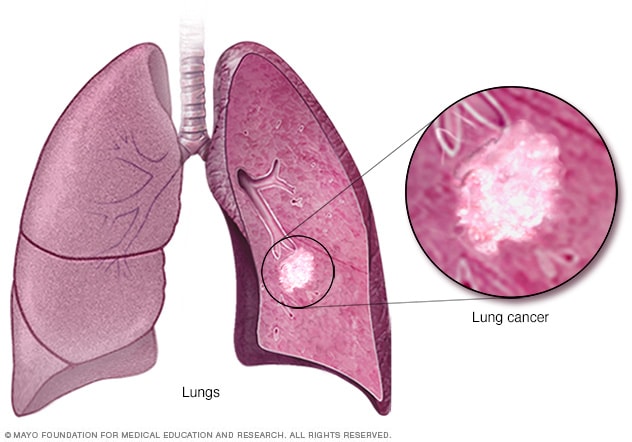
Lung cancer is a type of cancer that begins in the lungs. Your lungs are two spongy organs in your chest that take in oxygen when you inhale and release carbon dioxide when you exhale.
Lung cancer is the leading cause of cancer deaths in the United States, among both men and women. Lung cancer claims more lives each year than do colon, prostate, ovarian and breast cancers combined.
People who smoke have the greatest risk of lung cancer, though lung cancer can also occur in people who have never smoked. The risk of lung cancer increases with the length of time and number of cigarettes you've smoked. If you quit smoking, even after smoking for many years, you can significantly reduce your chances of developing lung cancer.

Symptoms

Lung cancer typically doesn't cause signs and symptoms in its earliest stages. Signs and symptoms of lung cancer typically occur only when the disease is advanced.
Signs and symptoms of lung cancer may include:
  • A new cough that doesn't go away
  • Coughing up blood, even a small amount
  • Shortness of breath
  • Chest pain
  • Hoarseness
  • Losing weight without trying
  • Bone pain
  • Headache

When to see a doctor

Make an appointment with your doctor if you have any persistent signs or symptoms that worry you.
If you smoke and have been unable to quit, make an appointment with your doctor. Your doctor can recommend strategies for quitting smoking, such as counseling, medications and nicotine replacement products.

Causes

Smoking causes the majority of lung cancers — both in smokers and in people exposed to secondhand smoke. But lung cancer also occurs in people who never smoked and in those who never had prolonged exposure to secondhand smoke. In these cases, there may be no clear cause of lung cancer.

How smoking causes lung cancer

Doctors believe smoking causes lung cancer by damaging the cells that line the lungs. When you inhale cigarette smoke, which is full of cancer-causing substances (carcinogens), changes in the lung tissue begin almost immediately.
At first your body may be able to repair this damage. But with each repeated exposure, normal cells that line your lungs are increasingly damaged. Over time, the damage causes cells to act abnormally and eventually cancer may develop.

Types of lung cancer

Doctors divide lung cancer into two major types based on the appearance of lung cancer cells under the microscope. Your doctor makes treatment decisions based on which major type of lung cancer you have.
The two general types of lung cancer include:
  • Small cell lung cancer. Small cell lung cancer occurs almost exclusively in heavy smokers and is less common than non-small cell lung cancer.
  • Non-small cell lung cancer. Non-small cell lung cancer is an umbrella term for several types of lung cancers that behave in a similar way. Non-small cell lung cancers include squamous cell carcinoma, adenocarcinoma and large cell carcinoma.

Risk factors

A number of factors may increase your risk of lung cancer. Some risk factors can be controlled, for instance, by quitting smoking. And other factors can't be controlled, such as your family history.
Risk factors for lung cancer include:
  • Smoking. Your risk of lung cancer increases with the number of cigarettes you smoke each day and the number of years you have smoked. Quitting at any age can significantly lower your risk of developing lung cancer.
  • Exposure to secondhand smoke. Even if you don't smoke, your risk of lung cancer increases if you're exposed to secondhand smoke.
  • Exposure to radon gas. Radon is produced by the natural breakdown of uranium in soil, rock and water that eventually becomes part of the air you breathe. Unsafe levels of radon can accumulate in any building, including homes.
  • Exposure to asbestos and other carcinogens. Workplace exposure to asbestos and other substances known to cause cancer — such as arsenic, chromium and nickel — also can increase your risk of developing lung cancer, especially if you're a smoker.
  • Family history of lung cancer. People with a parent, sibling or child with lung cancer have an increased risk of the disease.

Complications

Lung cancer can cause complications, such as:
  • Shortness of breath. People with lung cancer can experience shortness of breath if cancer grows to block the major airways. Lung cancer can also cause fluid to accumulate around the lungs, making it harder for the affected lung to expand fully when you inhale.
  • Coughing up blood. Lung cancer can cause bleeding in the airway, which can cause you to cough up blood (hemoptysis). Sometimes bleeding can become severe. Treatments are available to control bleeding.
  • Pain. Advanced lung cancer that spreads to the lining of a lung or to another area of the body, such as a bone, can cause pain. Tell your doctor if you experience pain, as many treatments are available to control pain.
  • Fluid in the chest (pleural effusion). Lung cancer can cause fluid to accumulate in the space that surrounds the affected lung in the chest cavity (pleural space).
    Fluid accumulating in the chest can cause shortness of breath. Treatments are available to drain the fluid from your chest and reduce the risk that pleural effusion will occur again.
  • Cancer that spreads to other parts of the body (metastasis). Lung cancer often spreads (metastasizes) to other parts of the body, such as the brain and the bones.
    Cancer that spreads can cause pain, nausea, headaches, or other signs and symptoms depending on what organ is affected. Once lung cancer has spread beyond the lungs, it's generally not curable. Treatments are available to decrease signs and symptoms and to help you live longer.

Prevention

There's no sure way to prevent lung cancer, but you can reduce your risk if you:
  • Don't smoke. If you've never smoked, don't start. Talk to your children about not smoking so that they can understand how to avoid this major risk factor for lung cancer. Begin conversations about the dangers of smoking with your children early so that they know how to react to peer pressure.
  • Stop smoking. Stop smoking now. Quitting reduces your risk of lung cancer, even if you've smoked for years. Talk to your doctor about strategies and stop-smoking aids that can help you quit. Options include nicotine replacement products, medications and support groups.
  • Avoid secondhand smoke. If you live or work with a smoker, urge him or her to quit. At the very least, ask him or her to smoke outside. Avoid areas where people smoke, such as bars and restaurants, and seek out smoke-free options.
  • Test your home for radon. Have the radon levels in your home checked, especially if you live in an area where radon is known to be a problem. High radon levels can be remedied to make your home safer. For information on radon testing, contact your local department of public health or a local chapter of the American Lung Association.
  • Avoid carcinogens at work. Take precautions to protect yourself from exposure to toxic chemicals at work. Follow your employer's precautions. For instance, if you're given a face mask for protection, always wear it. Ask your doctor what more you can do to protect yourself at work. Your risk of lung damage from workplace carcinogens increases if you smoke.
  • Eat a diet full of fruits and vegetables. Choose a healthy diet with a variety of fruits and vegetables. Food sources of vitamins and nutrients are best. Avoid taking large doses of vitamins in pill form, as they may be harmful. For instance, researchers hoping to reduce the risk of lung cancer in heavy smokers gave them beta carotene supplements. Results showed the supplements actually increased the risk of cancer in smokers.
  • Exercise most days of the week. If you don't exercise regularly, start out slowly. Try to exercise most days of the week.
  •  

    Diagnosis

    Testing healthy people for lung cancer

    People with an increased risk of lung cancer may consider annual lung cancer screening using low-dose CT scans. Lung cancer screening is generally offered to people 55 and older who smoked heavily for many years and are otherwise healthy.
    Discuss your lung cancer risk with your doctor. Together you can decide whether lung cancer screening is right for you.

    Tests to diagnose lung cancer

    If there's reason to think that you may have lung cancer, your doctor can order a number of tests to look for cancerous cells and to rule out other conditions.
    Tests may include:
    • Imaging tests. An X-ray image of your lungs may reveal an abnormal mass or nodule. A CT scan can reveal small lesions in your lungs that might not be detected on an X-ray.
    • Sputum cytology. If you have a cough and are producing sputum, looking at the sputum under the microscope can sometimes reveal the presence of lung cancer cells.
    • Tissue sample (biopsy). A sample of abnormal cells may be removed in a procedure called a biopsy.
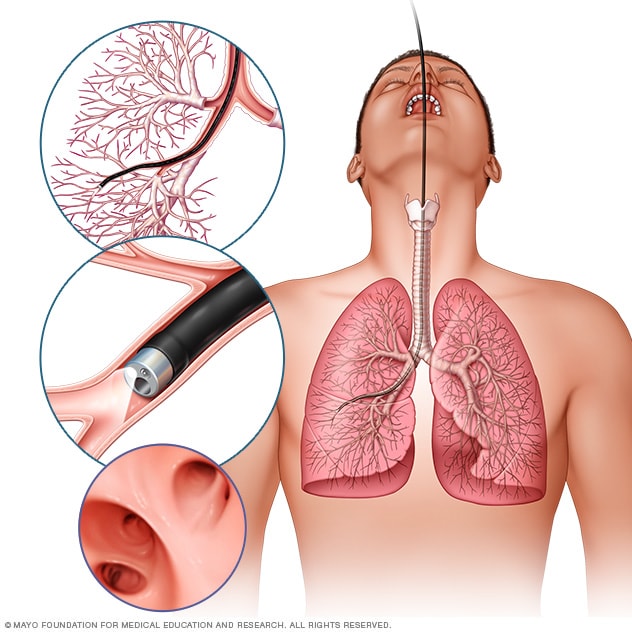
      Your doctor can perform a biopsy in a number of ways, including bronchoscopy, in which your doctor examines abnormal areas of your lungs using a lighted tube that's passed down your throat and into your lungs; mediastinoscopy, in which an incision is made at the base of your neck and surgical tools are inserted behind your breastbone to take tissue samples from lymph nodes; and needle biopsy, in which your doctor uses X-ray or CT images to guide a needle through your chest wall and into the lung tissue to collect suspicious cells.
      A biopsy sample may also be taken from lymph nodes or other areas where cancer has spread, such as your liver.
    Careful analysis of your cancer cells in a lab will reveal what type of lung cancer you have. Results of sophisticated testing can tell your doctor the specific characteristics of your cells that can help determine your prognosis and guide your treatment.

    Tests to determine the extent of the cancer

    Once your lung cancer has been diagnosed, your doctor will work to determine the extent (stage) of your cancer. Your cancer's stage helps you and your doctor decide what treatment is most appropriate.
    Staging tests may include imaging procedures that allow your doctor to look for evidence that cancer has spread beyond your lungs. These tests include CT, MRI, positron emission tomography (PET) and bone scans. Not every test is appropriate for every person, so talk with your doctor about which procedures are right for you.
    The stages of lung cancer are indicated by Roman numerals that range from 0 to IV, with the lowest stages indicating cancer that is limited to the lung. By stage IV, the cancer is considered advanced and has spread to other areas of the body.

    Treatment

    You and your doctor choose a cancer treatment plan based on a number of factors, such as your overall health, the type and stage of your cancer, and your preferences.
    Mayo Clinic lung cancer experts offer comprehensive and compassionate care to people with lung cancer. Each year, more than 4,900 people with lung cancer receive care at Mayo Clinic. This experience means your doctors are equipped with the knowledge and resources to provide you with exactly the care you need.
    At Mayo Clinic, you'll be cared for by a team of specialists from different fields who work together to determine your lung cancer treatment options. This team approach means your care is coordinated to meet your needs so that you receive the treatment that's best for you. Your treatment plans take your values and preferences into account.
    Your care team may include:
    • Oncologists
    • Pathologists
    • Pulmonologists
    • Radiation oncologists
    • Radiologists
    • Thoracic surgeons
    • Other specialists as needed, including doctors who specialize in palliative care
    Having a multidisciplinary team of experts on your side means all of your doctors are on the same page. This is especially beneficial when it comes to coordinating complex treatment protocols involving multiple therapies.
    In some cases, you may choose not to undergo treatment. For instance, you may feel that the side effects of treatment will outweigh the potential benefits. When that's the case, your doctor may suggest comfort care to treat only the symptoms the cancer is causing, such as pain or shortness of breath.

    Surgery

    More than 900 people undergo minimally invasive lung operations at Mayo Clinic every year. Studies show that hospitals with high surgical volumes have improved outcomes, including reduced post-surgical pain, shorter hospital stays and fewer complications.
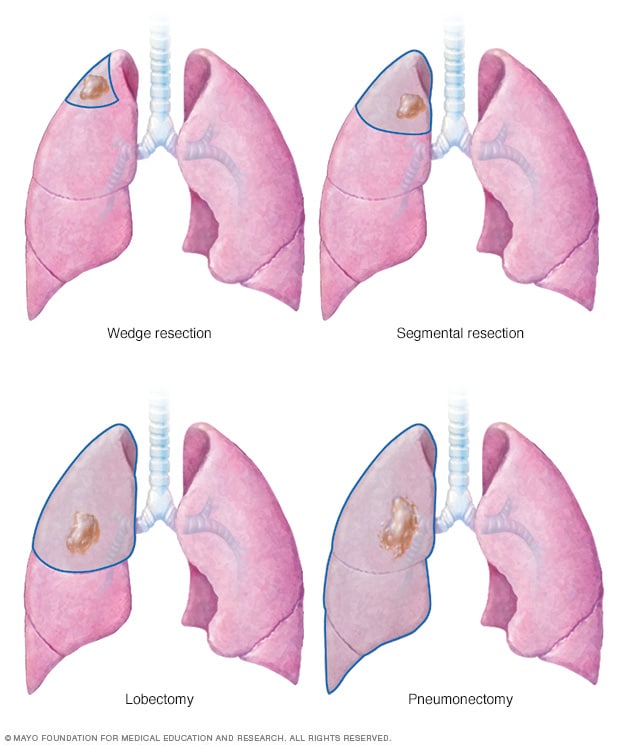
    During surgery your surgeon works to remove the lung cancer and a margin of healthy tissue. Procedures to remove lung cancer include:
    • Wedge resection to remove a small section of lung that contains the tumor along with a margin of healthy tissue
    • Segmental resection to remove a larger portion of lung, but not an entire lobe
    • Lobectomy to remove the entire lobe of one lung
    • Pneumonectomy to remove an entire lung
    If you undergo surgery, your surgeon may also remove lymph nodes from your chest in order to check them for signs of cancer.
    Surgery may be an option if your cancer is confined to the lungs. If you have a larger lung cancer, your doctor may recommend chemotherapy or radiation therapy before surgery in order to shrink the cancer. If there's a risk that cancer cells were left behind after surgery or that your cancer may recur, your doctor may recommend chemotherapy or radiation therapy after surgery.
    Advanced surgical techniques such as minimally invasive surgery and video-assisted thoracoscopic surgery (VATS) may reduce the amount of time you need to spend in the hospital after lung cancer surgery and may help you return to your normal activities sooner. Research shows that people who undergo minimally invasive lung cancer surgery at hospitals that perform many of these operations every year tend to experience less pain and fewer complications. Mayo Clinic surgeons perform more than 900 VATS procedures every year.

    Radiation therapy

    Radiation therapy uses high-powered energy beams from sources such as X-rays and protons to kill cancer cells. During radiation therapy, you lie on a table while a machine moves around you, directing radiation to precise points on your body.
    For people with locally advanced lung cancer, radiation may be used before surgery or after surgery. It's often combined with chemotherapy treatments. If surgery isn't an option, combined chemotherapy and radiation therapy may be your primary treatment.
    For advanced lung cancers and those that have spread to other areas of the body, radiation therapy may help relieve symptoms, such as pain.
    When compared with standard radiation therapy techniques, newer and precisely targeted treatments may be more effective and cause fewer side effects. Mayo Clinic offers cutting-edge radiation planning and treatment technologies, including intensity-modulated radiation therapy, volumetric modulated arc therapy, image-guided radiation therapy and proton therapy.

    Chemotherapy

    Chemotherapy uses drugs to kill cancer cells. One or more chemotherapy drugs may be given through a vein in your arm (intravenously) or taken orally. A combination of drugs usually is given in a series of treatments over a period of weeks or months, with breaks in between so that you can recover.
    Chemotherapy is often used after surgery to kill any cancer cells that may remain. It can be used alone or combined with radiation therapy. Chemotherapy may also be used before surgery to shrink cancers and make them easier to remove.
    In people with advanced lung cancer, chemotherapy can be used to relieve pain and other symptoms.

    Radiosurgery

    Stereotactic body radiotherapy, also known as radiosurgery, is an intense radiation treatment that aims many beams of radiation from many angles at the cancer. Stereotactic body radiotherapy treatment is typically completed in one or a few treatments.
    Radiosurgery may be an option for people with small lung cancers who can't undergo surgery. It may also be used to treat lung cancer that spreads to other parts of the body, including the brain.

    Targeted drug therapy

    Targeted drug treatments focus on specific abnormalities present within cancer cells. By blocking these abnormalities, targeted drug treatments can cause cancer cells to die.
    Many targeted therapy drugs are used to treat lung cancer, though most are reserved for people with advanced or recurrent cancer.
    Some targeted therapies only work in people whose cancer cells have certain genetic mutations. Your cancer cells may be tested in a laboratory to see if these drugs might help you.

    Immunotherapy

    Immunotherapy uses your immune system to fight cancer. Your body's disease-fighting immune system may not attack your cancer because the cancer cells produce proteins that blind the immune system cells. Immunotherapy works by interfering with that process.
    Immunotherapy treatments are generally reserved for people with advanced lung cancer.
    Mayo Clinic researchers made an important discovery that led to immunotherapy treatments called immune checkpoint inhibitors that have revolutionized care for people with metastatic lung cancer.

    Palliative care

    People with lung cancer often experience signs and symptoms of the cancer, as well as side effects of treatment. Supportive care, also known as palliative care, is a specialty area of medicine that involves working with a doctor to minimize your signs and symptoms.
    Your doctor may recommend that you meet with a palliative care team soon after your diagnosis to ensure that you're comfortable during and after your cancer treatment.
    In one study, people with advanced non-small cell lung cancer who began receiving supportive care soon after their diagnosis lived longer than those who continued with treatments, such as chemotherapy and radiation. Those receiving supportive care reported improved mood and quality of life. They survived, on average, almost three months longer than did those receiving standard care.

    Clinical trials

    Explore Mayo Clinic studies testing new treatments, interventions and tests as a means to prevent, detect, treat or manage this disease.

    Lifestyle and home remedies

    Coping with shortness of breath

    Many people with lung cancer experience shortness of breath at some point in the course of the disease. Treatments such as supplemental oxygen and medications are available to help you feel more comfortable, but they aren't always enough.
    To cope with shortness of breath, it may help to:
    • Try to relax. Feeling short of breath can be scary. But fear and anxiety only make it harder to breathe. When you begin to feel short of breath, try to manage the fear by choosing an activity that helps you relax. Listen to music, imagine your favorite vacation spot, meditate or say a prayer.
    • Find a comfortable position. It may help to lean forward when you feel short of breath.
    • Focus on your breath. When you feel short of breath, focus your mind on your breathing. Instead of trying to fill your lungs with air, concentrate on moving the muscles that control your diaphragm. Try breathing through pursed lips and pacing your breaths with your activity.
    • Save your energy for what's important. If you're short of breath, you may become tired easily. Cut out the nonessential tasks from your day so that you can save your energy for what needs to be done.
    Tell your doctor if you experience shortness of breath or if your symptoms worsen, as there are many other treatments available to relieve shortness of breath.

    Alternative medicine

    Complementary and alternative lung cancer treatments can't cure your cancer. But complementary and alternative treatments can often be combined with your doctor's care to help relieve signs and symptoms.
    The American College of Chest Physicians suggests people with lung cancer may find comfort in:
    • Acupuncture. During an acupuncture session, a trained practitioner inserts small needles into precise points on your body. Acupuncture may relieve pain and ease cancer treatment side effects, such as nausea and vomiting, but there's no evidence that acupuncture has any effect on your cancer.
    • Hypnosis. Hypnosis is typically done by a therapist who leads you through relaxation exercises and asks you to think pleasing and positive thoughts. Hypnosis may reduce anxiety, nausea and pain in people with cancer.
    • Massage. During a massage, a massage therapist uses his or her hands to apply pressure to your skin and muscles. Massage can help relieve anxiety and pain in people with cancer. Some massage therapists are specially trained to work with people who have cancer.
    • Meditation. Meditation is a time of quiet reflection in which you focus on something, such as an idea, image or sound. Meditation may reduce stress and improve quality of life in people with cancer.
    • Yoga. Yoga combines gentle stretching movements with deep breathing and meditation. Yoga may help people with cancer sleep better.

    Coping and support

    A diagnosis of cancer can be overwhelming. With time you'll find ways to cope with the distress and uncertainty of cancer. Until then, you may find it helps to:
    • Learn enough about lung cancer to make decisions about your care. Ask your doctor about your lung cancer, including your treatment options and, if you like, your prognosis. As you learn more about lung cancer, you may become more confident in making treatment decisions.
    • Keep friends and family close. Keeping your close relationships strong will help you deal with your lung cancer. Friends and family can provide the practical support you'll need, such as helping take care of your house if you're in the hospital. And they can serve as emotional support when you feel overwhelmed by cancer.
    • Find someone to talk with. Find a good listener who is willing to listen to you talk about your hopes and fears. This may be a friend or family member. The concern and understanding of a counselor, medical social worker, clergy member or cancer support group also may be helpful.
      Ask your doctor about support groups in your area. Or check with local and national cancer organizations, such as the National Cancer Institute or the American Cancer Society.

    Preparing for your appointment

    If you have signs and symptoms that worry you, start by seeing your family doctor. If your doctor suspects you have lung cancer, you'll likely be referred to a specialist. Specialists who treat people with lung cancer can include:
    • Doctors who specialize in treating cancer (oncologists)
    • Doctors who diagnose and treat lung diseases (pulmonologists)
    • Doctors who use radiation to treat cancer (radiation oncologists)
    • Surgeons who operate on the lung (thoracic surgeons)
    • Doctors who treat signs and symptoms of cancer and cancer treatment (palliative care specialists)

    What you can do

    Because appointments can be brief, and because there's often a lot of ground to cover, it's a good idea to be well-prepared. To help you get ready, try to:
    • Be aware of any pre-appointment restrictions. At the time you make the appointment, be sure to ask if there's anything you need to do in advance, such as restrict your diet.
    • Write down any symptoms you're experiencing, including any that may seem unrelated to the reason for which you scheduled the appointment. Note when your symptoms began.
    • Write down key personal information, including any major stresses or recent life changes.
    • Make a list of all medications, vitamins or supplements you're taking.
    • Gather your medical records. If you've had a chest X-ray or a scan done by a different doctor, try to obtain that file and bring it to your appointment.
    • Consider taking a family member or friend along. Sometimes it can be difficult to remember all the information provided during an appointment. Someone who accompanies you may remember something that you missed or forgot.
    • Write down questions to ask your doctor.

    Questions to ask if you've been diagnosed with lung cancer

    Your time with your doctor is limited, so preparing a list of questions will help you make the most of your time together. List your questions from most important to least important in case time runs out. For lung cancer, some basic questions to ask include:
    • What type of lung cancer do I have?
    • May I see the chest X-ray or CT scan that shows my cancer?
    • What is causing my symptoms?
    • What is the stage of my lung cancer?
    • Will I need more tests?
    • Should my lung cancer cells be tested for gene mutations that may determine my treatment options?
    • Has my cancer spread to other parts of my body?
    • What are my treatment options?
    • Will any of these treatment options cure my cancer?
    • What are the potential side effects of each treatment?
    • Is there one treatment that you think is best for me?
    • Is there a benefit if I quit smoking now?
    • What advice would you give a friend or family member in my situation?
    • What if I don't want treatment?
    • Are there ways to relieve the signs and symptoms I'm experiencing?
    • Can I enroll in a clinical trial?
    • Should I see a specialist? What will that cost, and will my insurance cover it?
    • Are there brochures or other material that I can take with me? What websites do you recommend?
    In addition to the questions that you've prepared to ask your doctor, don't hesitate to ask other questions during your appointment.

    What to expect from your doctor

    Your doctor is likely to ask you a number of questions. Being ready to answer them may allow more time later to cover other points you want to address. Your doctor may ask:
    • When did you first begin experiencing symptoms?
    • Have your symptoms been continuous or occasional?
    • How severe are your symptoms?
    • Do you wheeze when breathing?
    • Do you have a cough that feels like you're clearing your throat?
    • Have you ever been diagnosed with emphysema or chronic obstructive pulmonary disease?
    • Do you take medications for shortness of breath?
    • What, if anything, seems to improve your symptoms?
    • What, if anything, appears to worsen your symptoms?

    Expertise and rankings

    Mayo Clinic lung cancer specialists are widely respected for their expertise and experience in using the latest treatment options to provide personalized care for people with lung cancer.
    • Mayo Clinic Cancer Center meets strict standards for a National Cancer Institute comprehensive cancer center, recognizing scientific excellence and a multispecialty approach focused on cancer prevention, diagnosis and treatment.
    • Mayo Clinic doctors and researchers participate in research cooperatives, such as the Alliance for Clinical Trials in Oncology, which gives people with cancer access to the latest clinical trials.
    • Mayo Clinic Cancer Center is accredited by the American College of Surgeons' Commission on Cancer, which recognizes high-quality cancer treatment programs that provide comprehensive and multidisciplinary care.
    Mayo Clinic in Rochester, Minn., Mayo Clinic in Jacksonville, Fla., and Mayo Clinic in Scottsdale, Ariz., are ranked among the Best Hospitals for cancer by U.S. News & World Report.
    By Mayo Clinic Staff

ΠΟΙΕΣ ΕΙΝΑΙ ΟΙ ΠΙΟ ΣΥΝΗΘΙΣΜΕΝΕΣ ΑΙΤΙΕΣ ΤΩΝ ΑΛΛΕΡΓΙΩΝ


Αιτίες Αλλεργιών


Οι αλλεργίες είναι μια ανώμαλη αντίδραση του ανοσοποιητικού συστήματος. Οι άμυνες του οργανισμού αντιδρούν σε μία συνήθως αβλαβή ουσία, όπως η γύρη, το τρίχωμα των ζώων ή τα τρόφιμα.


Σχεδόν οτιδήποτε μπορεί να προκαλέσει μια αλλεργική αντίδραση, που μπορεί να είναι από ήπια και ενοχλητική μέχρι ξαφνική και απειλητική για την ίδια τη ζωή. Διαβάστε ποιες είναι οι  πιο κοινές αιτίες της αλλεργίας.

Γύρη
Η γύρη από τα δέντρα, τα χόρτα και τα ζιζάνια μπορεί να προκαλέσει αλλεργική ρινίτιδα ή εποχιακές αλλεργίες. Μπορεί να έχετε συμπτώματα όπως ρινική καταρροή, ρινική συμφόρηση και φαγούρα ή υγρά μάτια. Οι θεραπείες περιλαμβάνουν συνταγογραφούμενα και μη συνταγογραφούμενα φάρμακα και ενέσεις. Αποτρέψτε τα συμπτώματα μένοντας μέσα στο σπίτι τις επικίνδυνες μέρες, όταν η γύρη είναι στο… φόρτε της, κλείνοντας τα παράθυρα και ανοίγοντας το κλιματιστικό.

Τρίχωμα των ζώων
Οι πρωτεΐνες που εκκρίνονται από τους λιπαρούς αδένες του δέρματος ενός ζώου και είναι παρούσες στο σάλιο του μπορεί να προκαλέσουν αλλεργικές αντιδράσεις σε κάποιους ανθρώπους. Η αλλεργία μπορεί να χρειαστεί δύο ή και περισσότερα χρόνια να αναπτυχθεί και τα συμπτώματα δεν πρόκειται να εξαφανιστούν παρά μόνο δύο μήνες τουλάχιστον μετά την απομάκρυνση του ζώου. Εάν το κατοικίδιό σας, σάς προκαλεί αλλεργίες, κρατήστε το μακριά από την κρεβατοκάμαρά σας, αποφύγετε τα χαλιά και κάνετέ το τακτικά μπάνιο. Το σκούπισμα με την ηλεκτρική σκούπα, μπορεί επίσης να βοηθήσει.

Ακάρεα σκόνης
Τα ακάρεα της σκόνης είναι μικροσκοπικοί οργανισμοί που ζουν στη σκόνη του σπιτιού. Αναπτύσσονται σε υψηλή υγρασία και τρέφονται με τα νεκρά κύτταρα του δέρματος των ανθρώπων και των κατοικίδιων ζώων, καθώς και τη γύρη, τα βακτήρια και τους μύκητες. Μπορείτε να προλάβετε την αλλεργία από τα ακάρεα σκόνης, καλύπτοντας στρώματα, μαξιλάρια και ελατήρια, με υποαλλεργικά μαξιλάρια, πλύσιμο σεντονιών σε εβδομαδιαία βάση με ζεστό νερό και κρατώντας μακριά από το σπίτι αντικείμενα που μαζεύουν πολλή σκόνη, όπως ταριχευμένα ζώα, χαλιά και κουρτίνες.

Τσιμπήματα εντόμων
Οι άνθρωποι που είναι αλλεργικοί στα τσιμπήματα εντόμων κινδυνεύουν η αλλεργική τους αντίδραση να είναι απειλητική ακόμα και για τη ζωή τους. Τα συμπτώματα περιλαμβάνουν εκτεταμένο οίδημα και ερυθρότητα από το τσίμπημα ή το δάγκωμα που μπορεί να διαρκέσει μία εβδομάδα ή περισσότερο, πυρετό, ναυτία, κόπωση και χαμηλό πυρετό. Σε σπάνιες περιπτώσεις τα τσιμπήματα εντόμων μπορεί να προκαλέσουν σοβαρή αντίδραση (αναφυλαξία), δυσκολία στην αναπνοή, πρήξιμο γύρω από το πρόσωπο, το λαιμό ή το στόμα, ταχυπαλμία, φαγούρα, δερματικό εξάνθημα, ζαλάδα, ή απότομη πτώση της αρτηριακής πίεσης. Εάν έχετε σοβαρή αλλεργική αντίδραση, θα πρέπει να πάρετε επινεφρίνη αμέσως μετά το τσίμπημα.https://paediamed.blogspot.com.cy/2018/04/how-to-administer-adrenaline.html
Μούχλα

Η εισπνοή της μούχλας ή η επαφή μ’ αυτήν ή τα σπόρια μούχλας, μπορεί να προκαλέσουν αλλεργικές αντιδράσεις σε μερικούς ανθρώπους. Υπάρχουν πολλοί τύποι μούχλας και όλοι τους χρειάζονται την υγρασία για να αναπτυχθούν. Μπορεί να βρεθεί σε υγρούς χώρους όπως τα υπόγεια ή τα μπάνια, καθώς και σε χόρτο ή σάπια φύλλα. Αποφύγετε δραστηριότητες που πυροδοτούν τα συμπτώματα της μούχλας, όπως το να μαζεύετε φύλλα με την τσουγκράνα. Αερίστε όλες τις υγρές περιοχές στο σπίτι σας.

Τροφές
Το γάλα, τα οστρακοειδή, τα αυγά και οι ξηροί καρποί είναι από τις πιο συνηθισμένες τροφές που προκαλούν αλλεργίες. Μια αλλεργική αντίδραση συνήθως συμβαίνει μέσα σε λίγα λεπτά από την κατανάλωση της τροφής. Τα συμπτώματα μπορεί να περιλαμβάνουν αναπνευστικά προβλήματα, κνησμό, εμετό, διάρροια και πρήξιμο γύρω από το στόμα. Αποφύγετε τα τρόφιμα, στα οποία γνωρίζετε ότι είστε αλλεργικοί. Αν είστε εκτεθειμένοι σ’ αυτά, μπορεί να χρειαστείτε μια ένεση επινεφρίνης.

Λάτεξ
Το υλικό λάτεξ σε γάντια, προφυλακτικά, καθώς και σε ορισμένες ιατρικές συσκευές, μπορεί να προκαλέσει αλλεργία. Τα συμπτώματα περιλαμβάνουν εξάνθημα, ερεθισμό στα μάτια, ρινική καταρροή, φτέρνισμα, συριγμό και φαγούρα στο δέρμα ή στη μύτη. Οι αλλεργικές αντιδράσεις μπορεί να κυμαίνονται από την ερυθρότητα του δέρματος και τον κνησμό μέχρι την αναφυλαξία, μια σοβαρή αντίδραση που μπορεί να προκαλέσει δυσκολία στην αναπνοή και τα εξανθήματα. Αν είστε αλλεργικοί, φορέστε ένα αντιαλλεργικό βραχιόλι και έχετε μαζί σας ένα κιτ επινεφρίνης. https://paediamed.blogspot.com.cy/2018/04/how-to-administer-adrenaline.html

Φάρμακα
Τα συμπτώματα των αλλεργιών στα φάρμακα, όπως η πενικιλίνη ή η ασπιρίνη, μπορεί να κυμαίνονται από ήπια έως και απειλητικά για τη ζωή και μπορεί να περιλαμβάνουν κνίδωση, φαγούρα στα μάτια, κυκλοφοριακή συμφόρηση, πρήξιμο στο πρόσωπο, το στόμα και το λαιμό. Είναι καλύτερο να αποφευχθεί το φάρμακο συνολικά. Αλλά αν είστε εκτεθειμένοι σ’ αυτό, ο γιατρός σας μπορεί να συστήσει τη θεραπεία των ήπιων συμπτωμάτων με αντισταμινικά ή στεροειδή. Για σοβαρά συμπτώματα αλλεργίας, μπορεί να χρειαστεί επινεφρίνη.   https://paediamed.blogspot.com.cy/2018/04/how-to-administer-adrenaline.html

Αρωμα
Αρώματα βρίσκονται σε προϊόντα όπως τα αρώματα, αρωματικά κεριά, απορρυπαντικά πλυντηρίου, καλλυντικά και μπορούν να προκαλέσουν ήπια έως σοβαρά προβλήματα υγείας. Για τους περισσότερους ανθρώπους, τα συμπτώματα καταλαγιάζουν μόλις φύγει το άρωμα. Για μερικούς, ωστόσο, η επαναλαμβανόμενη έκθεση προκαλεί περισσότερα συμπτώματα που συμβαίνουν πιο συχνά και διαρκούν περισσότερο. Υπάρχει διχογνωμία σχετικά με το κατά πόσο οι αντιδράσεις απέναντι στα αρώματα είναι πραγματικές αλλεργίες ή απλώς είναι η αντίδραση του σώματός σας σε ένα ερέθισμα
information source :medinova.gr

WHAT IS ANAPHYLAXIS ? LEARN THE SIGNS AND SYMPTOMS IN CHILDREN

What Is Anaphylaxis?

Kids with severe allergies can be at risk for a sudden, potentially life-threatening allergic reaction called anaphylaxis.
Anaphylaxis can be scary — a child may feel like his or her throat is closing or might faint, for example. But the good news is that when treated quickly, it can be managed.
Anaphylaxis isn't common, but if your child has allergies (especially to insect stings, foods, or certain medicines), it's important to know about it and be prepared.
LEARN MORE . CLICK ON LINK
 https://www.facebook.com/pediamedcy/videos/160042451331659/
 https://www.facebook.com/pediamedcy/videos/169656317036939/
 https://www.facebook.com/pediamedcy/videos/206892336646670/
 https://paediamed.blogspot.com/2018/04/how-to-administer-adrenaline.html

ΑΠΟΦΡΑΞΗ ΤΟΥ ΡΙΝΟΔΑΚΡΥΪΚΟΥ ΠΟΡΟΥ - What causes a blocked tear duct in infants?

ΑΠΟΦΡΑΞΗ ΤΟΥ ΡΙΝΟΔΑΚΡΥΪΚΟΥ ΠΟΡΟΥ

ΑΠΟΦΡΑΞΗ ΤΟΥ ΡΙΝΟΔΑΚΡΥΪΚΟΥ ΠΟΡΟΥ

Τι είναι η απόφραξη του ρινοδακρυϊκού πόρου;
Η φυσιολογική αποχέτευση των δακρύων επιτυγχάνεται διαμέσου δύο μικρών οπών που βρίσκονται στη γωνία των βλεφάρων (ένα επάνω και ένα κάτω) και ονομάζονται δακρυϊκά σημεία (puncta). Στη συνέχεια, τα δάκρυα ρέουν μέσα στα δακρυϊκά σωληνάρια, στο δακρυϊκό ασκό και τέλος στο ρινοδακρυϊκό πόρο, για να αποχετευτούν στη μύτη. Όταν υπάρχει απόφραξη στη δακρυϊκή οδό, τότε τα δάκρυα λιμνάζουν στο μάτι και συχνά συνοδεύονται με βλεννώδεις εκκρίσεις και τοπικές λοιμώξεις.

Τι προκαλεί απόφραξη του ρινοδακρυϊκού πόρου (ΡΔΠ) στα παιδιά;

Η πιο συχνή αιτία είναι η ύπαρξη μιας μεμβράνης (βαλβίδα του Hasner) στο τελευταίο τμήμα του ρινοδακρυϊκού πόρου, η οποία φυσιολογικά ανοίγει αμέσως μετά το τοκετό.
Άλλες αιτίες είναι: η απουσία δακρυικών σημείων, η στένωση των δακρυικών οδών, η λοίμωξη, η παρεμπόδιση της εισόδου του ρινοδακρυϊκού πόρου στη μύτη από τμήμα του ρινικού οστού.

Πόση συχνή είναι η απόφραξη του ΡΔΠ στα παιδιά;

Περίπου το 5% των βρεφών εμφανίζουν συμπτώματα απόφραξης ΡΔΠ στο ένα ή και στα δύο μάτια. Από αυτά, το 90% θεραπεύεται αυτόματα κατά τη διάρκεια του πρώτου χρόνου της ζωής.

Ποια είναι τα συμπτώματα της απόφραξης ΡΔΠ;

Η συνεχής και έντονη δακρύρροια, οι κολλημένες βλεφαρίδες και οι έντονες εκκρίσεις (σημείο συνοδούς τοπικής λοίμωξης), αποτελούν τη πιο συνηθισμένη εικόνα αυτής της διαταραχής. Κάποιες φορές τα βλέφαρα πρήζονται και κοκκινίζουν, ενώ σε σοβαρές περιπτώσεις μπορεί να προκληθεί σοβαρή λοίμωξη του δακρυϊκού συστήματος (δακρυοκυστίτιδα). Τα συμπτώματα συνήθως εμφανίζονται από τις πρώτες ημέρες και εβδομάδες της ζωής.

Μπορεί τα συμπτώματα να ποικίλουν σε βαρύτητα;
Η βαρύτητα της κλινικής εικόνας μπορεί να αυξάνει κάτω από ορισμένες συνθήκες, όπως η συνύπαρξη λοίμωξης του ανώτερου αναπνευστικού (συνάχι), η έκθεση στον αέρα και στο κρύο.

Πως γίνεται η διάγνωση;

Συνεχής δακρύρροια και εκκρίσεις από πολύ νωρίς στη ζωή, συνηγορούν υπέρ της απόφραξης. Ωστόσο, ο παιδοφθαλμίατρος έχει τη δυνατότητα να αποκλείσει άλλες καταστάσεις με παρόμοια συμπτώματα (όπως γλαύκωμα, ξένο σώμα, τραύμα κ.ά.).

Ποια είναι η θεραπεία της απόφραξης ΡΔΠ;

Στη πλειοψηφία των περιπτώσεων η απόφραξη θεραπεύεται μόνη της μέσα στο πρώτο χρόνο της ζωής. Σε περιπτώσεις που η απόφραξη επιμένει, συνιστάται τοπικό μασάζ (φωτογραφία), τοπικές αντιβιοτικές σταγόνες (μόνο για λίγες ημέρες όταν υπάρχουν έντονες εκκρίσεις), καθετηριασμός του ΡΔΠ, καθετηριασμός ΡΔΠ και ένθεση σωληναρίων σιλικόνης.

Πως βοηθάει το τοπικό μασάζ;

Το μασάζ του ΡΔΠ εφαρμόζεται στο σπίτι και βοηθά στη διάνοιξη του ΡΔΠ, αρκεί να γίνεται με το σωστό τρόπο που θα υποδείξει ο παιδοφθαλμίατρος.

Πότε χρησιμοποιούνται τοπικά αντιβιοτικά;

Τοπικά αντιβιοτικά χρησιμοποιούνται μόνο όταν υπάρχουν έντονες εκκρίσεις που συνήθως δεν επιτρέπουν στο παιδί να ανοίξει το μάτι του. Τα φάρμακα δεν ανοίγουν το ΡΔΠ αλλά καταπολεμούν τη συνυπάρχουσα λοίμωξη.

Πότε πρέπει να γίνεται καθετηριασμός του ΡΔΠ;

Όταν ο ΡΔΠ παραμένει αποφραγμένος αφού παρέλθουν οι 12 πρώτοι μήνες της ζωής, θα πρέπει να γίνεται καθετηριασμός.

Πως γίνεται ο καθετηριασμός;

Ένας λεπτός καθετήρας (σαν λεπτό σύρμα) με λεπτές κινήσεις εισάγεται μέσω της φυσιολογικής οδού του ΡΔΠ στη μύτη. Στη συνέχεια χρησιμοποιούνται καθετήρες μεγαλύτερης διαμέτρου ώστε να διευρυνθεί ο ΡΔΠ. Κάποιες φορές απαιτείται η χρήση ενός ειδικού μικρού μπαλονιού (stent) για τη διάνοιξη στενών ΡΔΠ ή η χρήση ειδικών σωληναρίων σιλικόνης για διατήρηση της βατότητας του ΡΔΠ.

Τι είδους αναισθησία απαιτείται για το καθετηριασμό του ΡΔΠ;

Συνήθως ο καθετηριασμός γίνεται υπό ελαφρά γενική αναισθησία (μέθη) και δεν απαιτείται το παιδί να μείνει σε κλινική. Σε μερικές περιπτώσεις που απαιτείται η τοποθέτηση σωληναρίων σιλικόνης, μπορεί να απαιτηθεί βαθύτερη αναισθησία.

Ποια είναι τα ποσοστά επιτυχίας του καθετηριασμού ΡΔΠ;

Τα ποσοστά επιτυχίας είναι πάνω από 90%, ενώ σε κάποιες περιπτώσεις απαιτείται είτε επανάληψη του καθετηριασμού ή τοποθέτηση σωληναρίων σιλικόνης. Το ποσοστό μειώνεται σημαντικά ανάλογα με την ηλικία του παιδιού. Όσο μεγαλύτερο είναι το παιδί, τόσο μεγαλύτερα είναι τα ποσοστά υποτροπής. Σε σπάνιες περιπτώσεις απαιτείται μεγαλύτερη επέμβαση (ασκορινοστομία).


 What causes a blocked tear duct in infants?

Blocked tear ducts are common among babies. Most blocked tear ducts will get better on their own, and others will generally respond well to treatment.
The American Academy of Ophthalmology report that as many as 20 percent of babies are born with a blocked tear duct, which is also called a nasolacrimal obstruction.
Tears come from tear glands, which sit above a person's eyes on the side furthest from the nose. The tears drain through the tear ducts into the nose. Blockages can develop in the tear ducts and prevent tears from draining normally.
Tears play a significant role in people's vision. They help to maintain the health of the eyes by keeping them moist and supplying them with oxygen. They also protect the eyes by coating their surface with natural antibiotics and washing away irritating or harmful substances.

Symptoms of a blocked tear duct in a baby

baby rubbing its eyes
Blocked tear ducts normally improve without treatment.
According to leading ophthalmologists, blocked tear ducts are the most common disorder of the tear duct system in infants.
Infants with this condition will typically display the following signs:
  • tearing, which is worse in chilly or windy conditions or if the infant has a cold
  • excessive watering of the eyes, or epiphora
  • discharge from the eyes, also known as mattering or rheum, which can be either watery or a combination of mucus and pus, depending on the location of the blockage
  • pressure on the inner corners of the lower eyelids may increase the discharge
  • blocked tear ducts affect both eyes about 30 percent of the time
These signs may begin to show by the time a baby is 3 weeks old.
Even though their eyes may be full of tears, a blocked tear duct does not usually cause a baby much discomfort. If a baby with tearing and eye discharge seems to be uncomfortable, it is best to take them to see a doctor.

What are the causes?

The most common cause of a blocked tear duct in a baby is a tear duct system that has only partially developed.
This can lead to the following issues:
  • the valve at the end of the tear duct does not open correctly
  • the openings in the eyelids (punta) that tears usually flow through have not developed properly
  • the tear ducts are too narrow

Less common causes

The following causes of a blocked tear duct in a baby are less common:
  • infections causing swelling in the face, which puts too much pressure on the tear ducts
  • the nasal bone blocking the path that tears would typically follow into the nose
  • nasal polyps
  • cysts or tumors
  • injury to the tear ducts

Diagnosis

baby having eyes tested
The American Optometric Association recommend a full eye examination at 6 months.
The symptoms of a blocked tear duct in a baby begin developing early and will typically always be present before the baby is 3 months old.
Doctors look for the following signs to make a diagnosis:
  • excessive tearing
  • a swollen pool of tears below the eyes, known as a lacrimal lake
  • discharge from the eyes
  • crusty eyes or eyelashes after sleeping
  • a bump near the corner of the eye
  • swelling, soreness, or tenderness near the nose
A doctor will thoroughly examine the baby to ensure that other conditions are not responsible for the symptoms.
Causes and treatments for watering eyesThey will check the eye pressure and corneal health in case of infantile glaucoma. They will also look for redness, swelling, and irritation of the eyes to rule out conjunctivitis.

Treatment

The majority of blocked tear ducts resolve without treatment within the first year of the baby's life.
As a result, doctors tend to recommend conservative treatment only, while carefully monitoring the infant's health. This should clear 90 percent of tear duct blockages.

Conservative treatment methods

Some doctors may suggest massaging the tear sac. This forces fluid through the tear ducts which can remove the blockages.
They may also prescribe antibiotic eye drops if the baby's eyes are producing a lot of discharge, but this will not fix the underlying problem.

More invasive treatment methods

In some cases, a tear duct will not unblock with time and conservative treatment, and the doctor will need to use a different treatment method.
The most common approach is surgical probing, where the doctor inserts a medical instrument into the tear duct to remove the obstruction. For infants aged 6 months or younger, surgical probing will generally take place in the doctor's office without anesthesia. Slightly older children are more likely to undergo the procedure in an operating room under general anesthesia.
The procedure generally takes about 10 minutes and has an 80 percent success rate.
If probing does not entirely resolve the problem, additional treatment options may include:
  • using stents to keep the ducts open
  • using a balloon catheter to widen the ducts
  • altering the structure of the nasal cavity to promote drainage
  • using nasal endoscopy to remove cysts from the tear duct
  • using surgery to establish a new opening into the nasal cavity, although this is more common in adults
It can take up to 7 days after any of these procedures for the baby's symptoms to begin to improve.

Home remedies

Use a cotton ball soaked in water to clean crust from the eye.
Soak a soft cloth or cotton ball in warm water and use it gently to clean the crusty matter and dried discharge from the baby's eyes.
This is particularly important to do before using prescription antibiotic eye drops.
Always wipe the infant's eye from the inside, near the nose, toward the outside. Use a fresh cotton ball or a different part of the cloth for each eye if necessary.

Massage

Massage is the home treatment that doctors most commonly recommend for a blocked tear duct. An ophthalmologist or doctor can show people how to use this procedure on themselves or their child to open up the tear duct.
The American Academy of Ophthalmology suggest massaging the ducts using 10 strokes twice a day. For a baby, it is best to do the blocked tear duct massage during a diaper change.
Experts frequently recommend using a cotton swab rather than a finger, because the swab's smaller size makes it easier to target the tear sac.

Hot compresses

People can place hot compresses, such as a warm, moist washcloth, gently over the eyes to help relieve the symptoms of a blocked tear duct.

When to see a doctor

The American Optometric Association recommends a full eye examination for all infants at 6 months, even if no problems are evident. If there are concerns about the health of a baby's eyes, it is advisable to see a doctor right away.
Prompt treatment of an infant with a blocked tear duct, even conservative treatment, can reduce the risk of infection and the need for more invasive procedures at a later date.

Takeaway

Blocked tear ducts in babies generally resolve themselves.
It is essential to see a doctor if an infant has very watery eyes, discharge, or appears to be tearing an unusual amount without any apparent cause. In addition, as a blocked tear duct in a baby will not typically cause a child pain, it is advisable to seek medical advice if the baby is showing signs of discomfort or is unusually sensitive to light.
SOURCES :MEDICALNEWSTODAY , ΕΕΠΟΣ,