Τετάρτη 18 Φεβρουαρίου 2026

ΑΝΑΦΥΛΑΞΙΑ: ΑΞΙΟΛΟΓΗΣΗ ΚΑΙ ΠΑΡΑΠΟΜΠΗ ΜΕΤΑ ΑΠΟ ΕΠΕΙΓΟΥΣΑ ΘΕΡΑΠΕΙΑ - Anaphylaxis: Assessment and Referral After Emergency Treatment


ΑΝΑΦΥΛΑΞΙΑ: ΑΞΙΟΛΟΓΗΣΗ ΚΑΙ ΠΑΡΑΠΟΜΠΗ ΜΕΤΑ ΑΠΟ ΕΠΕΙΓΟΥΣΑ ΘΕΡΑΠΕΙΑ

Αυτή η περίληψη Κατευθυντήριων Οδηγιών από το Εθνικό Ινστιτούτο Υγείας των ΗΠΑ (NICE) περιέχει συστάσεις για άμεση διαχείριση και αξιολόγηση της αναφυλαξίας, παραπομπή σε εξειδικευμένο Αλλεργιολόγο και εκπαίδευση των ασθενών σχετικά με την αναφυλαξία, την διφασική αναφυλαξία και πού να αναζητήσουν περαιτέρω βοήθεια. Περιλαμβάνει μια οδό φροντίδας αναφυλαξίας για ύποπτη αναφυλακτική αντίδραση, από την άμεση αξιολόγηση και θεραπεία της αντίδρασης έως την παραπομπή στον ειδικό και την υποστήριξη του ασθενούς.

ΣΥΣΤΑΣΕΙΣ

-Καταγράψτε τα οξέα κλινικά χαρακτηριστικά της ύποπτης αναφυλακτικής αντίδρασης (ταχέως εξελισσόμενα, απειλητικά για τη ζωή προβλήματα που αφορούν τους αεραγωγούς [φάρυγγα ή λαρυγγικό οίδημα] ή/και την αναπνοή [βρογχόσπασμος με ταχύπνοια] ή/και την κυκλοφορία [υπόταση ή/και ταχυκαρδία] και, στις περισσότερες περιπτώσεις, σχετικές αλλαγές στο δέρμα και τους βλεννογόνους).

-Καταγράψτε τον χρόνο έναρξης της αντίδρασης.

-Καταγράψτε τις περιστάσεις αμέσως πριν από την έναρξη των συμπτωμάτων για να βοηθήσετε στον εντοπισμό του πιθανού παράγοντα.

-Μετά από ύποπτη αναφυλακτική αντίδραση σε ενήλικες ή νέους ηλικίας 16 ετών και άνω, πάρτε χρονικά καθορισμένα δείγματα αίματος για εξέταση τρυπτάσης μαστοκυττάρων ως εξής:

ένα δείγμα το συντομότερο δυνατό μετά την έναρξη της επείγουσας θεραπείας

ένα δεύτερο δείγμα ιδανικά εντός 1-2 ωρών (αλλά όχι αργότερα από 4 ώρες) από την έναρξη των συμπτωμάτων.

-Μετά από ύποπτη αναφυλακτική αντίδραση σε παιδιά ηλικίας κάτω των 16 ετών, εξετάστε το ενδεχόμενο λήψης δειγμάτων αίματος για εξέταση τρυπτάσης μαστοκυττάρων ως εξής, εάν η αιτία πιστεύεται ότι σχετίζεται με φάρμακο ή ιδιοπαθή αιτία:

ένα δείγμα το συντομότερο δυνατό μετά την έναρξη της επείγουσας θεραπείας

ένα δεύτερο δείγμα ιδανικά εντός 1-2 ωρών (αλλά όχι αργότερα από 4 ώρες) από την έναρξη των συμπτωμάτων.

Ενημερώστε το άτομο (ή, κατά περίπτωση, τον γονέα ή/και τον φροντιστή του) ότι ενδέχεται να απαιτηθεί δείγμα αίματος κατά την παρακολούθηση για τη μέτρηση της τρυπτάσης των μαστοκυττάρων κατά την έναρξη.

Ενήλικες και νέοι ηλικίας 16 ετών και άνω που έχουν λάβει επείγουσα θεραπεία για υποψία αναφυλαξίας θα πρέπει να παρακολουθούνται για 6-12 ώρες από την έναρξη των συμπτωμάτων, ανάλογα με την ανταπόκρισή τους στην επείγουσα θεραπεία. Σε άτομα με αντιδράσεις που ελέγχονται άμεσα και εύκολα, μπορεί να εξεταστεί μια μικρότερη περίοδος παρατήρησης, υπό την προϋπόθεση ότι λαμβάνουν την κατάλληλη μετεγχειρητική φροντίδα πριν από το εξιτήριο.

Τα παιδιά κάτω των 16 ετών που έχουν λάβει επείγουσα θεραπεία για υποψία αναφυλαξίας θα πρέπει να εισάγονται στο νοσοκομείο υπό τη φροντίδα μιας παιδιατρικής ομάδας.

Μετά την επείγουσα θεραπεία, προσφέρετε στους ασθενείς παραπομπή σε εξειδικευμένη Μονάδα Αλλεργιολογίας (ανάλογη με την ηλικία, όπου είναι δυνατόν) που αποτελείται από επαγγελματίες υγείας με τις απαραίτητες δεξιότητες και ικανότητες για την ακριβή διερεύνηση, διάγνωση, παρακολούθηση και παροχή συνεχούς διαχείρισης και εκπαίδευσης των ασθενών σχετικά με την υποψία αναφυλαξίας.

Μετά την επείγουσα θεραπεία, προσφέρετε στους ανθρώπους (ή, κατά περίπτωση, στον γονέα ή/και στον φροντιστή τους) μια κατάλληλη συσκευή έγχυσης αδρεναλίνης ως προσωρινό μέτρο πριν από το ραντεβού με τον Αλλεργιολόγο.

Πριν από το εξιτήριο, ένας επαγγελματίας υγείας με τις κατάλληλες δεξιότητες και ικανότητες θα πρέπει να προσφέρει στον ασθενή (ή, κατά περίπτωση, στον γονέα ή/και στον φροντιστή του) τα ακόλουθα:

-Πληροφορίες σχετικά με την αναφυλαξία, συμπεριλαμβανομένων των σημείων και συμπτωμάτων μιας αναφυλακτικής αντίδρασης

-Πληροφορίες σχετικά με τον κίνδυνο μιας διφασικής αντίδρασης

-Πληροφορίες σχετικά με το τι πρέπει να κάνουν σε περίπτωση αναφυλακτικής αντίδρασης (χρησιμοποιήστε την συσκευή έγχυσης αδρεναλίνης και καλέστε τις υπηρεσίες έκτακτης ανάγκης)

-Επίδειξη της σωστής χρήσης της συσκευής έγχυσης αδρεναλίνης και πότε να την χρησιμοποιούν, συμπεριλαμβανομένων συμβουλών ότι το άτομο πρέπει να ξαπλώσει μετά τη χρήση της συσκευής έγχυσης αδρεναλίνης (ή να καθίσει εάν δυσκολεύεται να αναπνεύσει) και δεν πρέπει να σταθεί ή να αλλάξει θέση απότομα, ακόμη και αν αισθάνεται καλύτερα

-Συνταγή για 2 ακόμη συσκευές έγχυσης αδρεναλίνης, με συμβουλές να έχει τις συσκευές έγχυσης μαζί του ανά πάσα στιγμή

-Συμβουλές για το πώς να αποφύγει την ύποπτη αιτία (εάν είναι γνωστή)

-Πληροφορίες σχετικά με την ανάγκη παραπομπής σε Μονάδα Αλλεργιολογίας και τη διαδικασία παραπομπής

-Πληροφορίες σχετικά με τις ομάδες υποστήριξης ασθενών.


Care Pathway

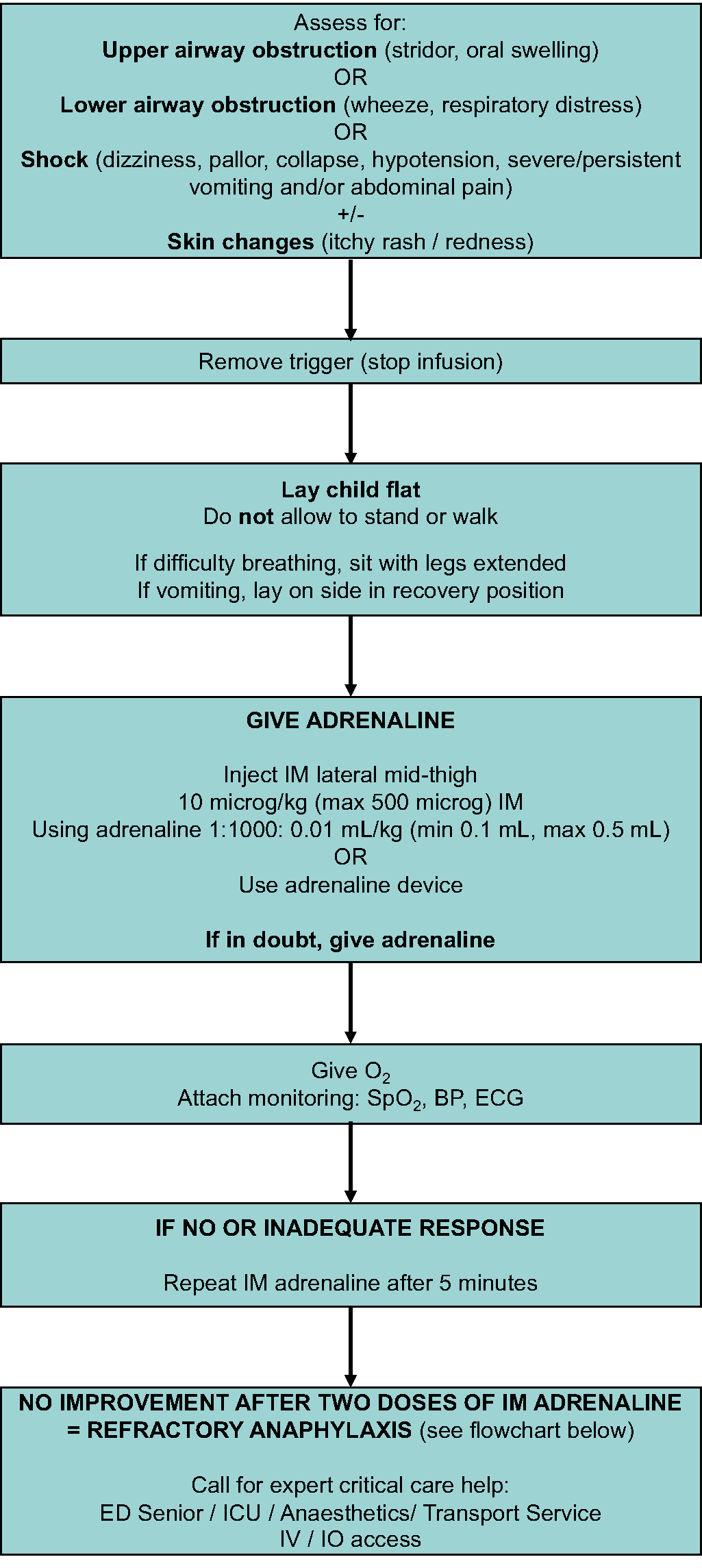
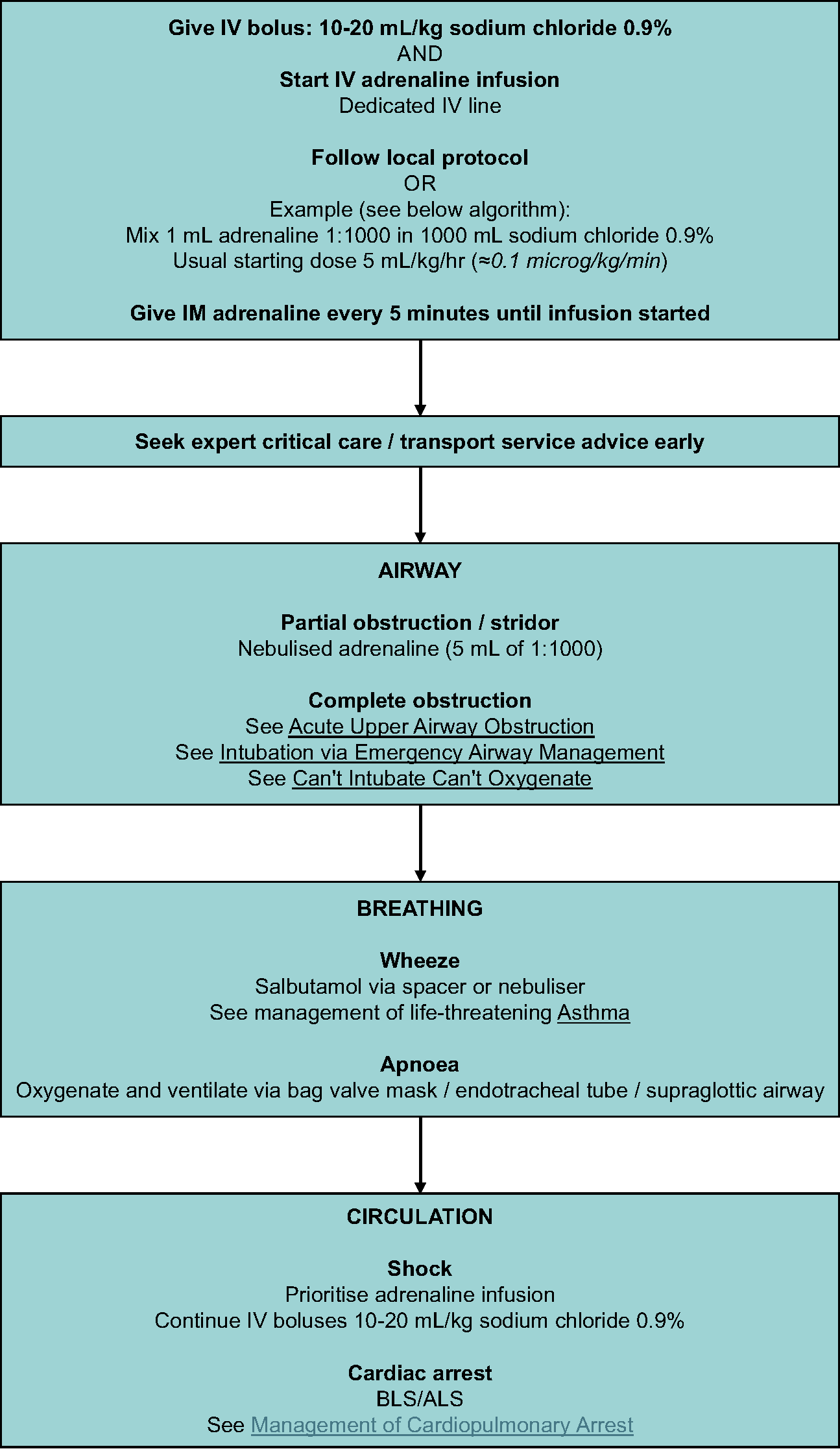
Algorithm 1: Care Pathway for Emergency Treatment of a Suspected Anaphylactic Reaction

 Anaphylaxis: Assessment and Referral After Emergency Treatment

Overview

This Medscape summary of guidance from the National Institute for Health and Care Excellence (NICE) contains recommendations for immediate anaphylaxis management and assessment, referral to specialist allergy services and patient education about anaphylaxis, biphasic anaphylaxis, and where to seek further help. It includes an anaphylaxis care pathway for suspected anaphylactic reaction, from immediate reaction assessment and treatment through to specialist referral and patient support.

List of All Recommendations

  • Document the acute clinical features of the suspected anaphylactic reaction (rapidly developing, life-threatening problems involving the airway [pharyngeal or laryngeal oedema] and/or breathing [bronchospasm with tachypnoea] and/or circulation [hypotension and/or tachycardia] and, in most cases, associated skin and mucosal changes).
  • Record the time of onset of the reaction.
  • Record the circumstances immediately before the onset of symptoms to help to identify the possible trigger.
  • After a suspected anaphylactic reaction in adults or young people aged 16 years or older, take timed blood samples for mast cell tryptase testing as follows:
    • a sample as soon as possible after emergency treatment has started
    • a second sample ideally within 1–2 hours (but no later than 4 hours) from the onset of symptoms.
  • After a suspected anaphylactic reaction in children younger than 16 years, consider taking blood samples for mast cell tryptase testing as follows if the cause is thought to be venom-related, drug-related or idiopathic:
    • a sample as soon as possible after emergency treatment has started
    • a second sample ideally within 1–2 hours (but no later than 4 hours) from the onset of symptoms.
  • Inform the person (or, as appropriate, their parent and/or carer) that a blood sample may be required at follow-up with the specialist allergy service to measure baseline mast cell tryptase.
  • Adults and young people aged 16 years or older who have had emergency treatment for suspected anaphylaxis should be observed for 6–12 hours from the onset of symptoms, depending on their response to emergency treatment. In people with reactions that are controlled promptly and easily, a shorter observation period may be considered provided that they receive appropriate post-reaction care prior to discharge.
  • Children younger than 16 years who have had emergency treatment for suspected anaphylaxis should be admitted to hospital under the care of a paediatric medical team.
  • After emergency treatment for suspected anaphylaxis, offer people a referral to a specialist allergy service (age-appropriate where possible) consisting of healthcare professionals with the skills and competencies necessary to accurately investigate, diagnose, monitor and provide ongoing management of, and patient education about, suspected anaphylaxis.
  • After emergency treatment for suspected anaphylaxis, offer people (or, as appropriate, their parent and/or carer) an appropriate adrenaline injector as an interim measure before the specialist allergy service appointment.
  • Before discharge a healthcare professional with the appropriate skills and competencies should offer people (or, as appropriate, their parent and/or carer) the following:
    • information about anaphylaxis, including the signs and symptoms of an anaphylactic reaction
    • information about the risk of a biphasic reaction
    • information on what to do if an anaphylactic reaction occurs (use the adrenaline injector and call emergency services)
    • a brand-specific demonstration of the correct use of the adrenaline injector and when to use it, including advice that the person should lie down after using the adrenaline injector (or sit up if they are struggling to breathe) and should not stand up or change position suddenly, even if they feel better
    • a prescription for 2 further adrenaline injectors, with advice to carry the injectors with them at all times
    • advice about how to avoid the suspected trigger (if known)
    • information about the need for referral to a specialist allergy service and the referral process
    • information about patient support groups.
  • Each hospital trust providing emergency treatment for suspected anaphylaxis should have separate referral pathways for suspected anaphylaxis in adults (and young people) and children.


 © NICE 2020. Anaphylaxis: assessment and referral after emergency treatment. Available from: nice.org.uk/cg134. All rights reserved. Subject to Notice of rights.

NICE guidance is prepared for the National Health Service in England. All NICE guidance is subject to regular review and may be updated or withdrawn. NICE accepts no responsibility for the use of its content in this product/publication. 

Reproduced under global licence.

SOURCES:NICE,Medscape


Αυτές οι πληροφορίες προορίζονται για γενική ενημέρωση του κοινού και σε καμία περίπτωση δεν μπορούν να αντικαταστήσουν την συμβουλή ιατρού ή άλλου αρμόδιου επαγγελματία υγείας .

This information is intended as a general guide only and not to provide specific information for individual patient care. Any questions about your own situation should be directed to your medical practitioner.

Pediamed,Pediamed4u,Pedialine,Dr.Nikos Konnaris


Σάββατο 7 Φεβρουαρίου 2026

Incubation Period


Incubation Period

Medically Reviewed.Last updated on 06/25/2024.

What is an incubation period?

“Incubation period” is a medical term that refers to the time between exposure to an infectious disease and the start of symptoms.

You can get infected in a variety of ways, depending on the specific disease and how it spreads. For example, exposure might mean you:

You can sometimes pinpoint the moment you were exposed to germs. Maybe it was that long train ride where the person next to you kept coughing. Or perhaps it was the dinner with your cousin who tested positive for COVID-19 the next day. Other times, you have no clue you were exposed to germs until you wake up feeling sick. Then, you try to think back to where it all began.

Knowing the incubation period for common diseases can help you know how long you should be on the lookout for symptoms — in yourself or a loved one — and when you’re out of the woods.

What happens during the incubation period?

During the incubation period, germs take up residence in your body and start making copies of themselves (reproducing). Soon, your immune system takes notice and jumps into action to clear out the invaders. This immune response leads to inflammation and symptoms like a sore throat, runny nose, rash or diarrhea.

Common infectious diseases have different incubation periods, ranging from hours to days or even weeks
Incubation periods vary widely according to the infectious disease in question.

How long might an incubation period be?

Healthcare providers usually measure an incubation period in days or weeks. But sometimes, like with certain STIs, an incubation period can span a month or more. Certain foodborne illnesses can cause symptoms within just hours.

Incubation period for common infectious diseases

Below are typical incubation periods for infectious diseases you or your family might encounter.

Incubation period for sexually transmitted diseases

Learning your partner tested positive for an STI can make you worry if you’ll test positive, too. The first thing to do if you’ve been exposed to an STI — even if you don’t have symptoms — is to call a healthcare provider. They’ll ask you some questions to help figure out your risk of catching the infection. They’ll also advise you on what to do next — like coming in for STI testing or treatment.

The incubation periods for STIs can vary widely. Here are some examples:

It’s possible to have an STI and not have any symptoms. Simply getting past the incubation period isn’t enough to assume all is OK. That’s why it’s important to talk to a provider about any exposures so you can get tested and know for sure.

Stomach bug incubation period

The incubation period for a stomach bug (commonly called the stomach flu, gastric flu or food poisoning) depends on the specific “bug” that’s making you sick. Many different viruses, bacteria and parasites can cause gastroenteritis, or inflammation in your stomach and intestines. This inflammation causes telltale stomach bug symptoms like nausea, vomiting and diarrhea.

Here are some incubation periods to be aware of:

Learning the incubation period for different stomach bugs is useful because you can pinpoint or rule out certain causes — like that sandwich that tasted a little funky or those leftovers you took a chance on.

You typically get a stomach bug from consuming contaminated food or water. But you can also get it from close contact with someone who’s sick or from touching a contaminated surface and then touching your mouth or nose.

Are you contagious during the incubation period?

Often, the answer is yes. The incubation period and the infectious period commonly overlap. In other words, you can often spread germs before you even have symptoms.

The infectious period is the span of time when you can spread germs to others that might make them sick. This usually refers to the days when you have symptoms but also at least some of the days leading up to your first symptoms.

For example, you’re most likely to spread the flu (influenza) to others during the first three days of symptoms. But it’s possible to spread it one day before your symptoms begin. That means the incubation period and the infectious period can overlap by about a day.

If you know you were exposed to an infectious disease but feel fine — and you’re wondering if you could make others sick — call a healthcare provider. They can tell you more specifics about the disease in question, its incubation period and how likely it is that you can spread the disease to others.

Why is the incubation period important?

Knowing the incubation period for specific diseases can:

  • Help you trace where and when you or your child picked up germs.
  • Help you know how long you should stay away from others (quarantine) or take precautions — like wearing a mask — to avoid spreading germs. Many common infections, like the flu and COVID-19, can spread from you to others before you have any symptoms.
  • Give you the chance to talk to a healthcare provider about whether you should get treatment after exposure to certain diseases, like STIs, to prevent an infection and/or avoid spreading it.

But there’s a catch — incubation periods are estimates drawn from research. They’re credible and accurate, but there are always outliers. That means some people might get sick sooner or later than expected after an exposure. Factors like your age or the amount of germs you were exposed to might play a role in how slow or fast you develop symptoms.

That’s why talking to your healthcare provider is the best way to know your risk of coming down with an infection. They’ll tell you if you should be concerned, what precautions you should take and whether you need to do anything (like get medications or a vaccine) due to your exposure.

A note from Cleveland Clinic

Waiting out an incubation period after exposure to an infectious disease can feel stressful or even overwhelming. You’re hoping for the best but preparing for several days of feeling miserable — or perhaps you’re anticipating a more serious diagnosis that requires long-term treatment. Whatever your situation, a healthcare provider can help you sort through the details and figure out what comes next.


source:Cleveland Clinic 

Παρασκευή 23 Ιανουαρίου 2026

ΑΝΑΚΛΗΣΗ Yetonamr Pull String Teething Toys- Popular baby teething toy recalled after 30+ choking incidents reported: CPSC


Ανακαλείται δημοφιλές βρεφικό παιχνίδι
****Popular baby teething toy recalled after 30+ choking incidents reported: CPSC***
Σε ανάκληση προχώρησαν οι αρμόδιες αρχές για δημοφιλές μασητικό παιχνίδι βρεφικής ηλικίας που διατίθεται μέσω της Amazon, έπειτα από δεκάδες αναφορές περιστατικών πνιγμού. Την ανακοίνωση έκανε η U.S. Consumer Product Safety Commission (CPSC).
****Popular baby teething toy recalled after 30+ choking incidents reported: CPSC***
Η ανάκληση αφορά περίπου 7.000 μασητικά παιχνίδια Yetonamr Pull String Teething Toys, τα οποία πωλήθηκαν μέσω της πλατφόρμας από τον Ιούνιο έως και τον Οκτώβριο του 2025. Οι καταναλωτές καλούνται να διακόψουν άμεσα τη χρήση τους.
Σύμφωνα με την CPSC, έχουν καταγραφεί συνολικά 32 περιστατικά πνιγμού που σχετίζονται με το συγκεκριμένο προϊόν. Όπως επισημαίνεται στην επίσημη ανακοίνωση, τα ανακληθέντα παιχνίδια δεν συμμορφώνονται με τα υποχρεωτικά πρότυπα ασφάλειας, καθώς τα σιλικονούχα κορδόνια τους είναι μικρότερα από το ελάχιστο επιτρεπόμενο μήκος.
Οι αρμόδιες αρχές προειδοποιούν ότι τα κορδόνια μπορούν να φτάσουν στο πίσω μέρος του λαιμού του βρέφους και να σφηνωθούν, δημιουργώντας σοβαρό κίνδυνο αναπνευστικής δυσχέρειας, πνιγμού και, σε ακραίες περιπτώσεις, απώλειας ζωής.
Η ανακοίνωση έρχεται να υπενθυμίσει τη σημασία του προσεκτικού ελέγχου των παιχνιδιών βρεφικής ηλικίας και της άμεσης συμμόρφωσης με οδηγίες ανάκλησης για την ασφάλεια των παιδιών.
 

Recall Details

Description:

This recall involves the Yetonamr Pull String Teething Toy. The teething toy is an off-white disc shape with either a red ball or blue ball in the middle and six long, silicone pull string “tentacles” of various colors running through the ball. There are also three free-spinning rings and soft push buttons on the disc. “Model no. 688-59” is printed on the product packaging.

Remedy:

Consumers should stop using the teething toy immediately, take it away from children and contact Longyanguiheng to receive a full refund. Consumers should cut and discard all silicone string tentacles, write “DESTROYED” on the main body of the toy using a permanent marker, and email a photograph of the destroyed product to yetonamr_recall@163.com.

Incidents/Injuries:

CPSC is aware of 32 choking incidents.

Sold Online At:
Amazon.com from June 2025 through October 2025 for between $10 and $16.
Importer(s):

Longyan Xinluo District Guiheng E-Commerce Co. Ltd., dba Longyanguiheng, of China

Manufactured In:
China
Recall number:
26-204


Παρασκευή 2 Ιανουαρίου 2026

الجرَب

 الجرَب 

​​​​​الجرَب عدوى جلدية يسبّبها العث، وهي شديدة العدوى وقد تسبب حكّة شديدة. تُعالَج هذه العدوى بالأدوية (كريم أو أقراص). ولمنع زيادة انتشار الجرَب، من المهم علاج جميع أفراد الأسرة في آن واحد، وتنظيف الأشياء المنزلية التي قد تحتوي على العث أو بيضه.

Last updated: 22 September 2025


​ما هو الجرَب؟

الجرَب مرض جلدي تسبّبه حشرات عث صغيرة تُسمى القارمة الجربية. تحفر حشرات العث هذه جحورًا تحت الجلد حيث تعيش وتضع بيضها.

كيف ينتشر الجرَب؟

ينتشر الجرَب عن طريق التلامس الجلدي لمدة طويلة مع شخص مصاب به، وهو ما يحدث غالبًا بين أشخاص يعيشون في المنزل نفسه. يمكن أن ينتشر الجرَب أيضًا عن طريق مشاركة أغطية الأسرّة والمناشف والملابس، مع أن هذا أقل شيوعًا.

ما هي الأعراض؟

يمكن أن يعاني المصابون بالجرَب من الأعراض التالية:

  • حكّة جلدية شديدة، وعادةً ما تتفاقم ليلاً.
  • طفح جلدي على شكل نتوءات حمراء صغيرة. يظهر الطفح الجلدي عادةً بين أصابع اليدين والقدمين، وعلى المعصمين والمرفقين والإبطين والأعضاء التناسلية والثديين. وقد يُصاب الرضّع أيضًا بطفح جلدي على الرأس والوجه والرقبة والكفّين وباطن القدمين.
  • خطوط أشبه بالخيوط على الجلد.

وعادةً ما تنجم أعراض الجرَب عن رد فعل تحسسي تجاه العث. ولذلك قد يستغرق ظهور الأعراض ما يصل إلى 6 أسابيع. إذا كنت قد أصبت بالجرَب من قبل، فإن الأعراض ستظهر عادةً في وقت أبكر، في غضون يوم إلى 4 أيام.

ما هي مضاعفات الجرَب؟

عادةً ما يكون الجرَب قابلاً للعلاج دون مضاعفات دائمة. إلّا أن الخدْش يمكن أن يُسبب تمزّقات في الجلد، وهذا يمكن أن يؤدي إلى التهابات أخرى قد تنتشر إلى باقي الجسم وتُسبب مشاكل في القلب والكلى.

كيف يتمّ تشخيص الجرَب؟

يمكن أن يكون تشخيص الجرَب صعبًا. وأفضل طريقة لمعرفة إصابتك به هي مراجعة طبيبك، إذ يمكنه التحقّق من علامات الجرَب وأعراضه. وأحيانًا يُجري الطبيب فحصًا جلديًا للتأكّد، لكن النتائج ليست دقيقة دائمًا.

كيف تتمّ معالجة الجرَب؟

من المهم علاج الشخص المصاب بالجرَب والأشخاص المخالطين في منزله، وتنظيف الأشياء المنزلية التي قد تحتوي على العث أو بيضه لمنع زيادة انتشار العدوى.

يمكن للشخص المصاب بالجرَب أن ينقله للآخرين قبل بدء أعراض مثل الحكّة. وعادةً ما يكون الشخص مُعديًا حتى 24 ساعة بعد بدء العلاج الذي يقضي على العث وبيضه.

إرشادات للشخص المصاب بالجرَب

من المهم استشارة طبيبك قبل استخدام أي علاج للجرَب. وهذا مهم بشكل خاص للأطفال الرضّع، والنساء الحوامل، وكبار السن، والأشخاص الذين لديهم حالات جلدية.

علاج الجرب هو عادةً كريم يوضع على الجلد (كريم بيرميثرين (permethrin cream) 5%) أو قرص (إيفرمكتين). يمكنك شراء البيرميثرين من الصيدلية، ولكنك ستحتاج إلى وصفة من طبيبك لشراء الإيفرمكتين.

كرّر استخدام علاج الجرَب بعد 7 أيام.

قد تستمر الحكّة لمدة تصل إلى شهر بعد العلاج، حتى إذا كان العلاج فعّالاً. راجع طبيبك إذا استمرت الحكّة لأكثر من 4 أسابيع بعد العلاج.

إرشادات للمخالطين المنزليين والمخالطين المقرّبين

عالج جميع المخالطين المنزليين والمخالطين المقرّبين الذين لامستهم خلال الشهر الماضي، بما في ذلك المخالطين جنسيًا، بعلاج الجرَب في نفس الوقت. عالجهم حتى لو لم تظهر عليهم أي أعراض.

إرشادات خاصة بالمنزل

اغسل بالماء الساخن (50 درجة مئوية على الأقل) أغطية الأسرّة والمناشف والملابس التي استخدمها الشخص المصاب بالجرَب خلال الأيام الثلاثة التي سبقت العلاج. ضع الأشياء التي لا يمكن غسلها في كيس بلاستيكي محكم الغلق لمدة 8 أيام لقتل أي عث وبيضه. نظف الفرش والأثاث الناعم والأرضيات بمكنسة الكهربائية.  

كيف يتمّ منع الإصابة بالجرَب؟

لمنع تكرار الإصابة بالجرَب ونقله للآخرين، من المهم:

  • إبقاء أي شخص مصاب بالجرَب في المنزل بعيدًا عن رياض الأطفال والمدارس وأماكن العمل والأنشطة الأخرى إلى ما بعد 24 ساعة من بدء العلاج.
  • علاج الشخص المصاب بالجرَب وجميع المخالطين المنزليين والمقرّبين في نفس الوقت.
  • غسل أغطية الأسرّة والمناشف والملابس والأثاث المكوّن من قماش الذي استخدمه الشخص المصاب بالجرَب خلال الأيام الثلاثة التي سبقت بدء العلاج.

هل يمكن أن تُصاب بالجرَب مرة ثانية؟

نعم، إذ إنك لا تُصبح محصنًا ضد الجرَب. من المهم علاج المخالطين المنزليين والمقرّبين في الوقت نفسه لمنع تكرار الإصابة.

هل يمكن أن تُصاب بالجرَب من الحيوانات؟

لا يعيش الجرَب البشري على الحيوانات. وهذا يعني أنه لا يمكن نقل الجرَب البشري إلى حيوانك الأليف. وبالمثل، لا يمكن لأنواع أخرى من العثّ الموجود على الحيوانات أن تتكاثر على البشر، ولا تُسبب إصابةً مستمرة.

ما هي استجابة السلطات الصحية العامة؟

عدوى الجرب ليست من الحالات التي ينبغي الإبلاغ عنها

الجرَب ليس من الحالات التي ينبغي الإبلاغ عنها في نيو ساوث ويلز.

لا تحتاج دائرة الصحة في نيو ساوث ويلز إلى أن تعرف عن حالات الجرَب.

موارد أخرى

للمزيد من المعلومات​