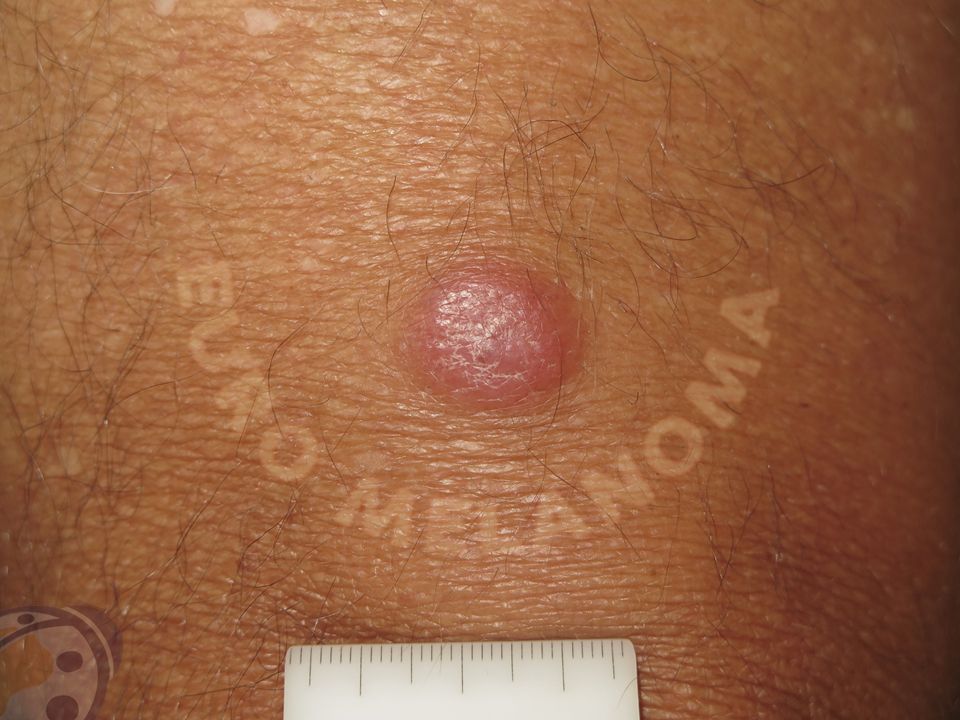
Εμφάνιση αναρτήσεων με ετικέτα melanoma. Εμφάνιση όλων των αναρτήσεων

Σάββατο 17 Μαΐου 2025

Καρκίνος Δέρματος-Αυτοεξέταση-SKIN CANCER -Skin self-exam

Ο καρκίνος του δέρματος είναι η πιο συχνή μορφή καρκίνου, όμως μπορεί να προληφθεί!

Ο καρκίνος του δέρματος  πλέον αποτελεί έναν από τους πιο συχνούς τύπους καρκίνου. Ο καρκίνος στο δέρμα, εμφανίζεται περισσότερο σε χώρες με αυξημένη ηλιακή ακτινοβολία όπως η Ελλάδα και η Κύπρος.

Εμφανίζεται σε διάφορες περιοχές του σώματος, με κυριότερες αυτές που εκτίθενται στον ήλιο (καρκίνος δέρματος προσώπου), χωρίς να σημαίνει ότι περιοχές που δεν εκτίθενται συχνά δεν είναι δυνατό να προσβληθούν.

Οι πιο συνηθισμένοι τύπο καρκίνου του δέρματος είναι οι εξής:

  • Το βασικοκυτταρικό καρκίνωμα
  • Το ακανθοκυτταρικό καρκίνωμα
  • Το μελάνωμα που αποτελεί και τον σοβαρότερο τύπο καρκίνου του δέρματος.

Πιο αναλυτικά:

Το βασικοκυτταρικό καρκίνωμα ή αλλιώς ο βασικοκυτταρικός καρκίνος δέρματος, εμφανίζεται συχνότερα σε ηλικίες άνω των 75 ετών και κυρίως σε λευκά και ξανθά άτομα.

Αναπτύσσεται κυρίως σε περιοχές που είναι εκτεθειμένες στον ήλιο (πρόσωπο, χέρια), χωρίς φυσικά να αποκλείονται οι υπόλοιπες περιοχές.

Εμφανίζεται αρχικά ως ένα μικρό οζίδιο ερυθρού χρώματος και αναπτύσσεται αργά. Δεν κάνει μεταστάσεις – πλην ελαχίστων εξαιρέσεων – δεν είναι τόσο επιθετικός σε σχέση με άλλες μορφές, διαβρώνει όμως τους ιστούς στο σημείο που αναπτύσσεται.

Η διάγνωση για αυτό το είδος καρκίνου του δέρματος γίνεται μέσω κλινικής εξέτασης και βιοψίας. Η επιλογή της θεραπείας εξαρτάται από το μέγεθος, τη θέση και το στάδιο του καρκίνου.

Το ακανθοκυτταρικό καρκίνωμα είναι δεύτερο σε σειρά εμφάνισης στα λευκά και ξανθά άτομα. και αυτό διότι η επιδερμίδα τους, παρέχει λιγότερη προστασία από την ηλιακή ακτινοβολία. Εμφανίζεται κυρίως σε πιο προχωρημένες ηλικίες και τυπικά αναπτύσσεται στο πρόσωπο ή στο δέρμα της κεφαλής (καρκίνος δέρματος στο κεφάλι), με τη μορφή ερυθρού οζίδιου. Μεγαλώνει σχετικά γρήγορα και μπορεί να κάνει μετάσταση σε τοπικούς ιστούς. Αν ανιχνευθεί σε πρώιμο στάδιο, οι πιθανότητες θεραπείας και επιβίωσης είναι αρκετά υψηλές.

Το μελάνωμα είναι το η πιο σπάνια μορφή καρκίνου του δέρματος, αλλά ταυτόχρονα και η πιο επιθετική, καθώς δημιουργεί πολύ εύκολα μεταστάσεις. Αποτελεί τον δεύτερο πιο συχνό καρκίνο σε άτομα μεταξύ 15-34 ετών. Συνήθως κάνει την εμφάνισή του με μια μαύρη κηλίδα στο δέρμα.

Πολλές φορές το μελάνωμα μοιάζει οπτικά με τους σπίλους, ωστόσο εμφανίζει κάποιες διαφορές ως προς την συμμετρία, το χρώμα και το μέγεθος.

Ο κυριότερος λόγος εμφάνισης του μελανώματος, είναι η υπερβολική έκθεση στον ήλιο. Για το λόγο αυτό, η παρατεταμένη έκθεση στην ηλιακή ακτινοβολία χωρίς προστασία, ειδικά από νεαρή ηλικία, μπορεί να προκαλέσει καρκίνο στο δέρμα αργότερα.

Γενικότερα, η έγκαιρη διάγνωση οποιασδήποτε αλλαγής στο δέρμα, καθώς και η άμεση αντιμετώπιση είναι ζωτικής σημασίας για την εξάλειψη της νόσου. Όλοι οι τύπου καρκίνου του δέρματος είναι ιάσιμοι σε υψηλό ποσοστό – εκτός από το μελάνωμα που αναπτύσσεται επιθετικά – εάν αντιμετωπιστούν σε αρχικό στάδιο.

Σε περίπτωση που παρατηρήσετε οποιαδήποτε αλλαγή στο δέρμα σας, θα πρέπει να επικοινωνήσετε με εξειδικευμένο δερματολόγο. Οι τρόποι θεραπείας του καρκίνου του δέρματος είναι πολλοί και εξαρτώνται από το είδος και το στάδιο του καρκίνου. Σε κάθε περίπτωση όμως η έγκαιρη διάγνωση είναι απαραίτητη.


How to perform a skin self-exam

Examine your body in a full-length mirror

Examine your body front and back in a full-length mirror, then look at the right and left sides with your arms raised.
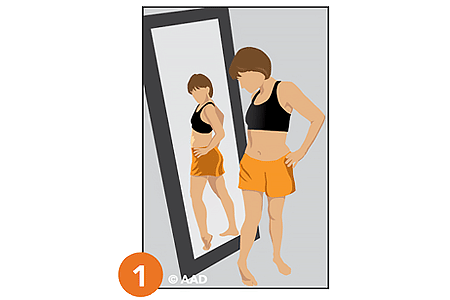
Illustration of a person examining their body for signs of skin cancer in a full-length mirror

Look at your underarms, forearms, and palms

Bend your elbows and look carefully at your forearms, underarms, fingernails, and palms.
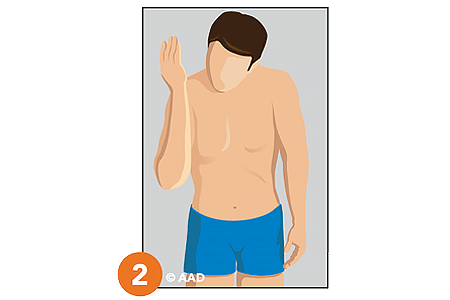
Illustration of a person examining forearm for signs of skin cancer

Look at your legs, between toes, and soles of your feet

Look at the backs of your legs and feet, the spaces between your toes, your toenails, and the soles of your feet.
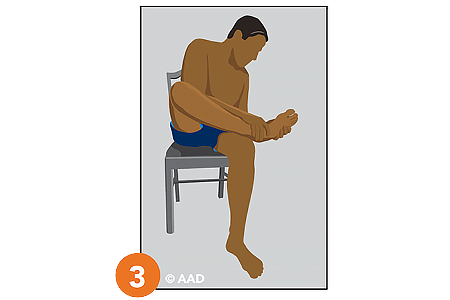
Illustration of a person examining their feet for signs of skin cancer

Use a hand mirror to examine your neck and scalp

Examine the back of your neck and scalp with a hand mirror. Part your hair for a closer look at your scalp.
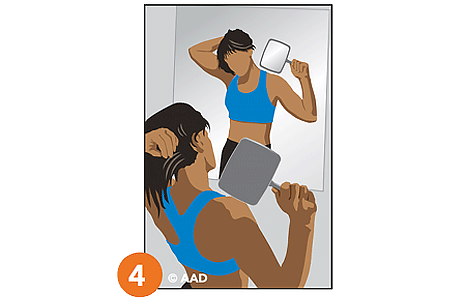
Illustration of a person holding a hand mirror examining their neck and scalp for signs of skin cancer

Use a hand mirror to check your back and buttocks

Finally, check your back and buttocks with a hand mirror.
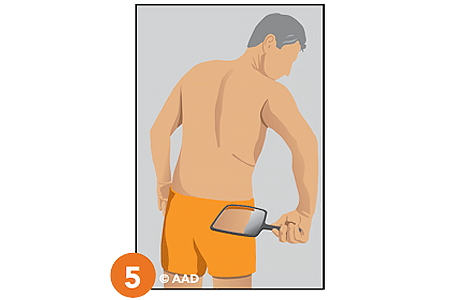
Illustration of a person holding a hand mirror checking his back and buttocks for signs of skin cancer

SOURCES:AAD (American Academy of Dermatology Association),

Ελληνική Δερματολογική & Αφροδισιολογική Εταιρεία ,SKIN CANCER FOUNDATION,CLEVELAND CLINIC,DR A.IFANTI etc

 Αυτές οι πληροφορίες προορίζονται για γενική ενημέρωση του κοινού και σε καμία περίπτωση δεν μπορούν να αντικαταστήσουν την συμβουλή ιατρού ή άλλου αρμόδιου επαγγελματία υγείας .

This information is intended as a general guide only and not to provide specific information for individual patient care. Any questions about your own situation should be directed to your medical practitioner.

Pediamed,Pediamed4u,Pedialine,Dr.Nikos Konnaris


Σάββατο 13 Μαΐου 2023

Preventing skin cancer

Preventing skin cancer


Skin cancer is one of the world’s most common cancers. The good news is that it is usually treatable if detected early - and there are things we can do to prevent it.

Always be sunsafe

Avoid unnecessary exposure.

Seek shade where possible, and avoid the summer sun during the middle of the day.

sun icon

Wear protective clothing

Include dark colours, long sleeves, a widebrimmed hat and UV-rated sunglasses.

For children, look for clothing with inbuilt sun protection.

clothes icon

Apply sunscreen

Check that yours has a high protection factor against both UVA and UVB rays. Remember that sunscreen takes effect around half an hour after its application and only lasts for two to three hours.

uv icon

Protect children

Children are at the greatest risk of long-term health issues related to unsafe sun exposure.

Outside play is important, but you should never let a child get sunburnt.

baby icon 


What to look for

Check your skin once a month for spots that:

  • Change size, colour and/or shape
  • Appear different to the rest (the ‘Ugly Duckling’ sign)
  • Are asymmetric or have uneven borders
  • Feel rough or scaly (sometimes you can feel lesions before you can see them)
  • Are multi-coloured
  • Are itchy
  • Are bleeding or oozing
  • Look pearly
  • Look like a wound but do not heal

If you see two or more of these warning signs, don’t delay. Visit your doctor immediately.


Melanoma

This is the least common form of skin cancer, but also the most dangerous. It can affect people of any age, unlike other types that are more common among older people.


It presents as a spot that becomes darkly pigmented or develops irregular edges or different colours over time, or as a rapidly-growing pink or red lump. It can spread internally, so immediate treatment is required.

Basal cell carcinoma

This is the most common form of skin cancer, but also the least dangerous. It typically presents as an elevated skin-coloured lump with a shiny, pearl-like edge, a wound that does not heal, or a slightly crusty lump that grows slowly over time. If left untreated, it may ulcerate and invade deeper tissues.

Squamous cell carcinoma

This is the second most common form of skin cancer, occurring in areas of the skin that have had a lot of sun exposure, such as the face and scalp. It presents as a crusty lump which may grow quickly and become ulcerated and weepy. It can spread rapidly, especially if on the lips, ears, fingers and toes, or in immunosuppressed patients. Surgical treatment to remove the lesions is essential.

Actinic keratosis

This occurs most commonly in middle-aged and elderly people, on areas most exposed to the sun such as the face, neck, ears, back of the hands and scalp. It presents as red-brown scaly and rough patches of skin. The lesions are pre-cancerous; in 10– 15% of cases they may develop into squamous cell carcinomas, so they should be treated to prevent progression.

Merkel cell carcinoma

It is a rare aggressive form of skin cancer. In Europe the incidence rate reported is 0.59 per 100.000 and it is a cancer mainly diagnosed after the age of 50. The lesion is asymptomatic, enlarge rapidly and is more frequent in immunosuppressed patients. This tumor maybe induced by a polyomavirus or by UV exposure.

Because melanoma is particularly serious, you should be familiar with the signs to look for.


The ABCDE of melanoma can help you to detect it early:


A. Is the spot asymmetric?


Benign


Malignant

B. Does it have uneven borders?


Benign


Malignant

C. Does it contain different colours?


Benign


Malignant

D. Is it larger than 6mm in diameter?


Benign

  m2021d2

Malignant

E. Is there an evolution in growth?


Before


After

Check your skin once a month for any changes or suspicious-looking spots.
Your check should cover your whole body, front and back, with particular emphasis on areas exposed to the sun.
Stand in front of a full-length mirror with a hand mirror for those hard-to-reach places.

1. Look at your face, including your nose, lips, mouth and on and behind your ears.

how 1

2. Check your scalp, using a comb to part your hair. If you do not have much hair, check your entire scalp very thoroughly.

how 2

3. Check the front and back of your hands and in between your fingers.

how 3

4. Then focus on your neck, chest and upper body. Women, be sure to check between and underneath your breasts.

how 4

5. Bend your elbow to check your upper arm and armpits.

how 5

6. Use your hand mirror to check the back of your neck and your back, top and bottom.

how 6

7. Check your buttocks and the back of your legs. Finish by checking the soles of your feet and in between your toes.

how 7

Skin cancer can affect anybody at any age. It is most common in people over 50, or people who have had prolonged exposure to the sun.


You are at higher risk if you:


  • Have fair skin or are prone to sunburn
  • Were sunburnt during childhood
  • Have spent a lot of time in the sun (for work or leisure)
  • Have periodical exposure periods (e.g. on holidays)
  • Use sunbeds
  • Have more than 50 moles
  • Have a family history of skin cancer
  • Are over the age of 50
  • Have undergone an organ transplant


Whether you’re in a high-risk group or not, there are simple things you can do now to protect you and your family from skin cancer.

By protecting your skin, checking yourself regularly and knowing the signs, you can stop any suspicious skin lesions before they become something more serious.

Skin cancer can be treated, and early diagnosis makes the chances of a full recovery very high.


If you spot a suspicious lesion, it is vital that you have it checked by a doctor or preferably a dermatologist as soon as possible.


Where treatment is delayed, the condition worsens, and in some instances, can lead to disfigurement, complications and even death. Don’t let delay reduce your chances of a positive outcome.


The golden rules are:


  • Don’t ignore it, hoping it will go away
  • Don’t wait to see how it develops, or manage it yourself
  • Don’t assume it’s nothing serious
  • Don’t think it isn’t a priority to get it sorted
  • And above all, don’t be afraid to see your doctor or dermatologist


Skin cancer is treatable if it’s caught early.

If you have a spot that looks suspicious, go and see your doctor.